Physio

Complex Physiotherapy Case Consulting Service

When Standard Care Isn’t Enough

At Head2Toe Physiotherapy and Podiatry, we understand that not every injury or condition follows a straightforward path. Some patients continue to experience persistent pain, incomplete recovery, or confusing symptoms even after undergoing standard physiotherapy, chiropractic, osteopathy, or even specialist care. If this sounds familiar, our Complex Case Consulting Service may be exactly what you need.

This service is conducted by Nadeena Thenabadu, a physiotherapist who has completed postgraduate training in the diagnosis and management of complex musculoskeletal conditions with long consultation times to ensure the full picture of your issue is obtained. This structure and advanced training allows Nadeena to go beyond traditional physiotherapy assessments, using a detailed, evidence-based approach to refine diagnosis, develop a tailored management strategy, and provide clarity for patients feeling stuck in their rehabilitation journey.

Who Should Book This Service?

  • You have ongoing pain or loss of function despite previous physiotherapy, chiro, osteo, or specialist visits.
  • You’ve been given multiple conflicting diagnoses.
  • You’re considering surgery and want to explore advanced non-surgical options first.
  • You feel stuck, frustrated, or uncertain about your recovery.

Consultation Fees

  • Initial Consultation (60 minutes): $219
  • Subsequent Consultations (30minutes): $119

Important:
This service is not eligible for Members First or preferred provider network rebates. This means your insurer will still cover if you have physiotherapy extras, but may not provide a large rebate due to this being a different non-standard and extensive physiotherapy service.

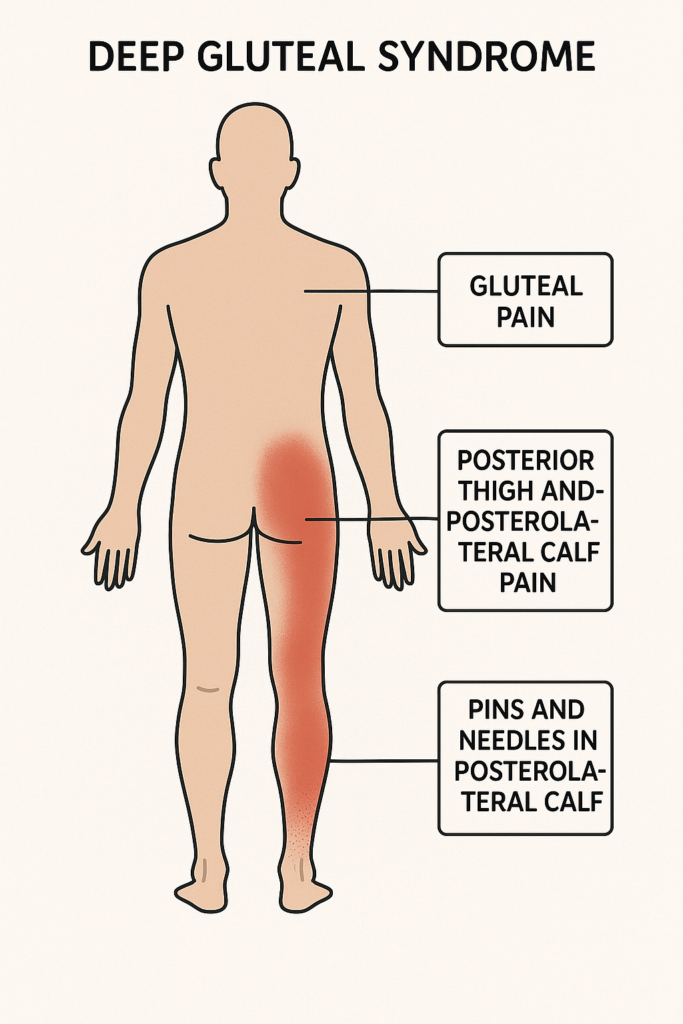
Case Study 1: Deep Gluteal Syndrome (Chronic Gluteal and Leg Pain)

Deep Gluteal Syndrome

Background:
A patient presented with right-sided deep gluteal pain, referral into the leg, worse with walking, sitting, and side-lying​.

Advanced Clinical Reasoning Process:

  • Previous diagnosis: Lumbar disc herniation causing nerve compression (radiculopathy).
  • Tests performed: Neurological examination, neurodynamic testing (SLR and slump), piriformis testing (Pace, Beatty manoeuvres), hip mobility tests.
  • Findings:
    • Gait and functional analysis examining walking mechanics, including stride length and trunk sway
    • Neurological examination to test dermatomes, myotomes, and reflexes.
    • Neurodynamic testing including:
    • Straight Leg Raise (SLR) with internal rotation biasing.
    • Slump Test both in sitting and modified with symptom provocation.
    • Hip-focused tests such as:
    • Freiberg’s Sign for piriformis compression,
    • FADIR Test (Flexion, Adduction, Internal Rotation),
    • FABER-R Test (Flexion, Abduction, External Rotation),
    • Resisted External Derotation Test to assess deep hip rotators.
    • Specialised deep gluteal nerve entrapment tests:
      • Pace Maneuver (seated piriformis stretch),
      • Beatty Maneuver (sidelying active piriformis test).
    • Sacroiliac joint cluster testing (Laslett’s SIJ cluster) to exclude SIJ pathology.
    • Palpation of the piriformis muscle and sciatic nerve.

New Diagnosis:

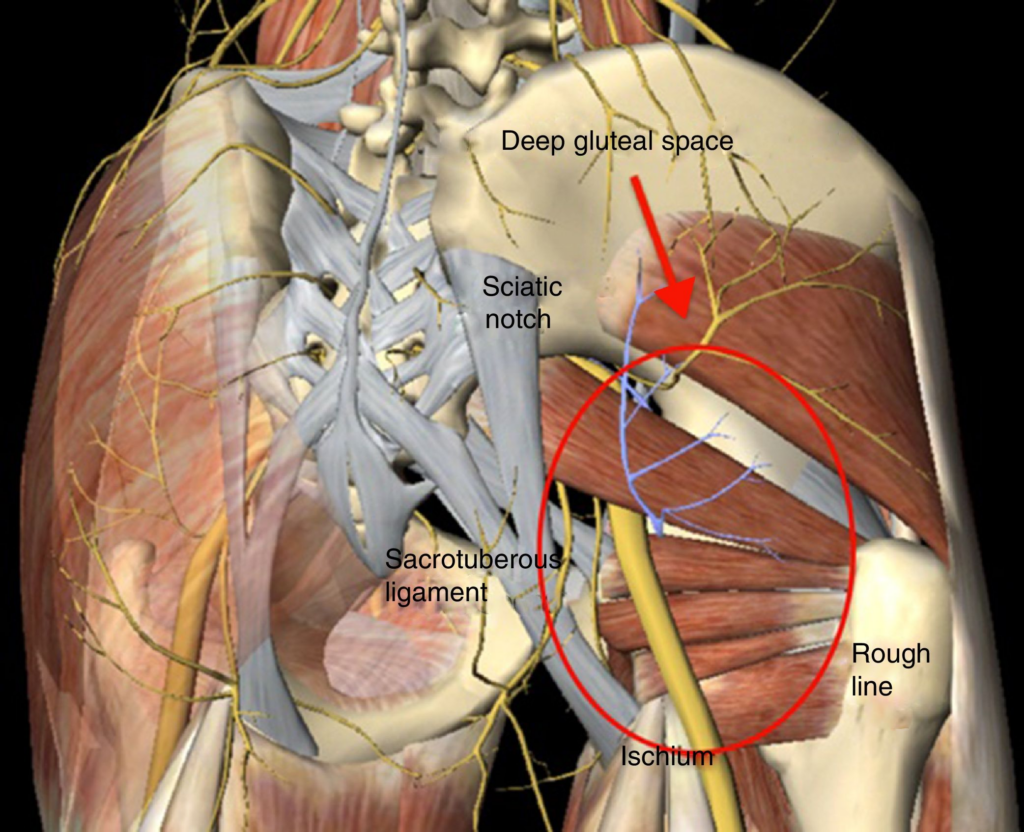
Likely deep gluteal syndrome (sciatic nerve compression under piriformis/obturator complex).

Deep Gluteal Syndrome

Management Plan:

  • Targeted neurodynamic stretching to reduce nerve irritation.
  • Dry needling and myofascial release of piriformis.
  • Strengthening program for hip rotators and abductors to unload compressive forces.
  • Walking retraining to shorten stride length and reduce gluteal nerve compression.

Case Study 2: Complex Shoulder Instability (Post-Accident Shoulder Pain)

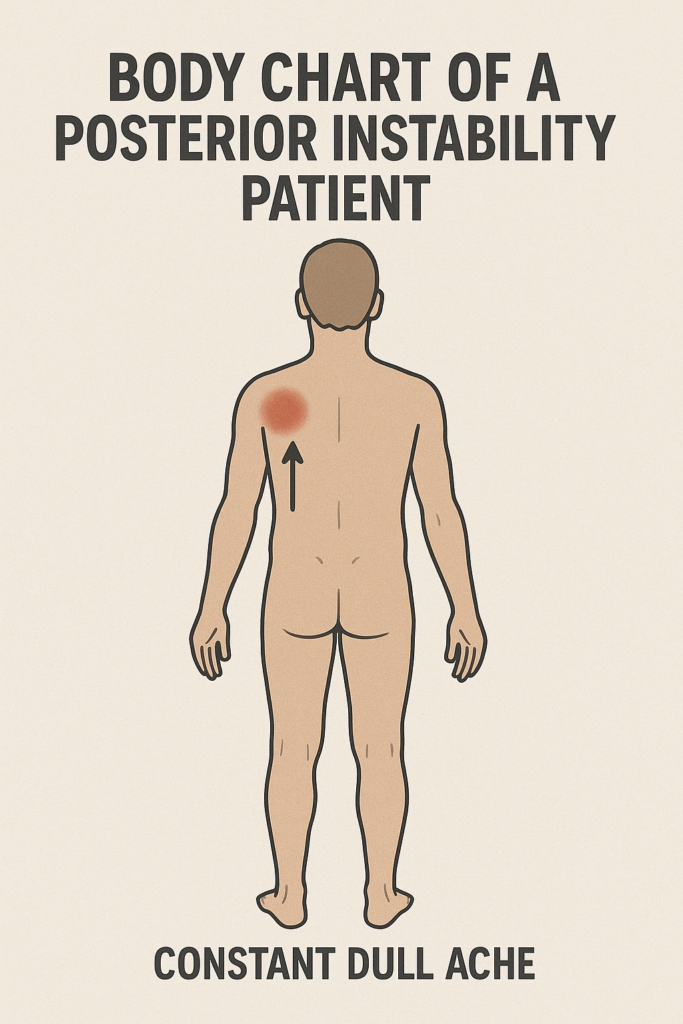
Shoulder Instability

Background:
A patient with left posterior and lateral shoulder pain post-motor vehicle accident. Unable to drive for more than 10 minutes or lift 2kg overhead​.

Clinical Reasoning Process:

  • Previous hypothesis: Rotator cuff tendinopathy.
  • Tests performed: Shoulder ROM, strength tests, stability tests (anterior/posterior glide), symptom modification with scapula repositioning.
  • Findings:
    • Observation for postural deviations including scapular depression and anterior humeral head migration
    • Shoulder-specific orthopedic tests:
    • Rotator cuff strength tests for internal rotation, external rotation, abduction, flexion, open can and empty can positions,
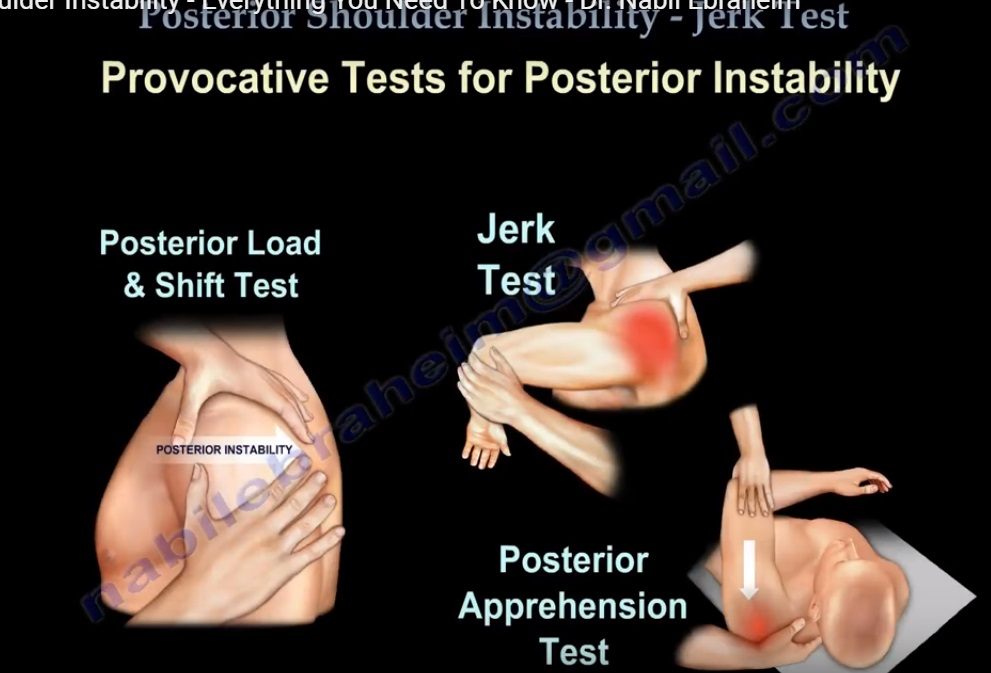
    • Anterior and posterior instability tests, including relocation maneuvers, and jerk test
    • Sulcus Sign for multidirectional instability,
    • AC joint loading tests to rule out acromioclavicular joint contribution,
    • O’Brien’s Test for labral pathology (negative).
    • Passive accessory glides of the humeral head (anterior-posterior, superior-inferior).
    • Cervical spine examination:
    • Range of motion testing,
    • Palpation (PPIVM and PAIVM) for cervical segments C2/3 and C5/6,
    • Deep neck flexor strength testing.
    • Neurodynamic testing targeting the radial nerve.
    • Motor control assessment of scapular stability during shoulder elevation and shrugging.

New Diagnosis:

A combined posterior shoulder instability and rotator cuff tendinopathy, with secondary motor control deficits.

Posterior shoulder instability

Management Plan:

  • Early stage: Motor control training of the deep neck flexors and scapula stabilisers to improve shoulder mechanics.
  • Mid-stage: Progressive strengthening following Lyn Watson posterior instability protocol focusing on posterior cuff.
  • Late stage: Load management, return to overhead activities, education on shoulder positioning during daily tasks.
This error message is only visible to WordPress admins

Error: No feed with the ID 3 found.

Please go to the Instagram Feed settings page to create a feed.

Contact Information
map-location
42 Pascoe Vale Road, Moonee Ponds 3039
map-location
Suite 1, Level 1, 30 Sydney Road Brunswick Victoria 3056 Australia
map-location
1407 Burke Road, Kew 3102

    Get In Touch

    Please provide your contact details (email or phone) as we cannot reply to emails coming via the website.