Oct. 20, 26
SIJ Pain or Lower Back Pain? How a Physio Assesses the Difference
Buttock or lower back pain can come from the SIJ, the spine or the hip. Here is how our physios tell them apart, and what treatment involves.
Learn More








Poor posture can place the joints of the spine and limbs out of alignment, putting the body’s mechanical structures at a disadvantage. Over time, this misalignment can contribute to pain, increase the risk of injury, or slow down recovery from an existing condition.
Ergonomics is the science of how your body interacts with the objects and environments around you—whether that’s your office workstation, your bike setup, or even how you hold a tennis racquet. When your environment isn’t set up properly, your body often compensates with inefficient movements that place unnecessary stress on muscles and joints.
At Head2Toe Physiotherapy and Podiatry, our physiotherapists are experts in assessing posture and ergonomics. With the right guidance—such as learning how to set up your office chair and computer, or how to hold sports equipment correctly—you can move more efficiently, reduce strain on your body, and recover from injury more effectively. Not only can this speed up your rehabilitation, it also lowers the chance of further injury in the future.

Ergonomics play a crucial role in preventing and managing neck pain, particularly for individuals who spend long hours at a workstation. A well-designed ergonomic workspace can significantly reduce the strain on your neck and support a pain-free work experience.
When using the example of desk workers, Here are some tips to create a Pain-free Workspace
At Head2Toe Physiotherapy and Podiatry, our physiotherapists are experts in assessing and retraining posture. We combine hands-on treatment (such as manual therapy, stretching, and targeted exercises) with specialised techniques including:

to support correct alignment and retrain your body’s positioning.

to help you see and understand your posture in real time.

from your office desk set-up to driving position, sleeping habits, and pillow choice
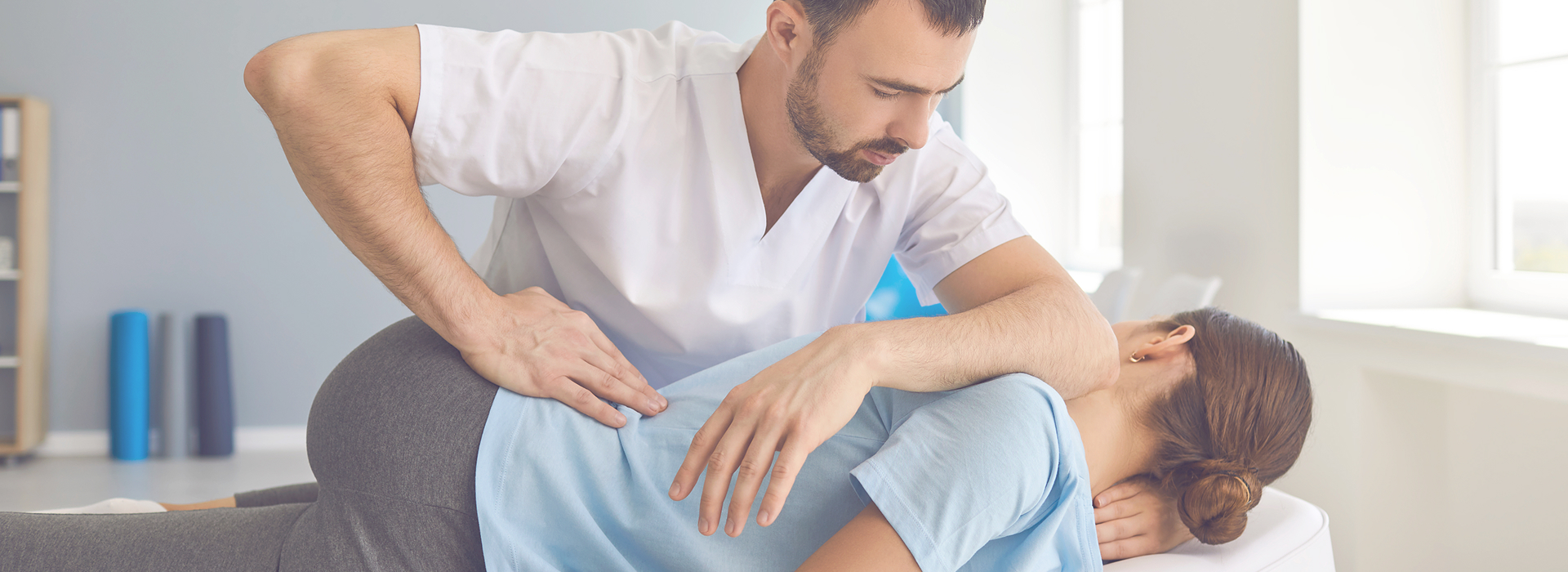
By addressing these areas, we place your joints and muscles in the best possible position—helping you recover faster from injury, prevent future problems, and optimise performance in sport, work, and daily life.
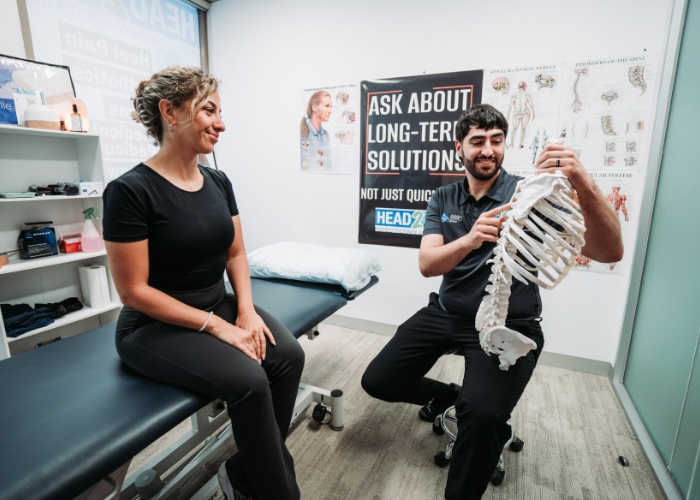
When you book an ergonomics and posture consultation at Head2Toe Physiotherapy and Podiatry, you can expect a thorough and personalised approach:
Our goal is to make sure you not only feel better, but also understand how to prevent issues from coming back.
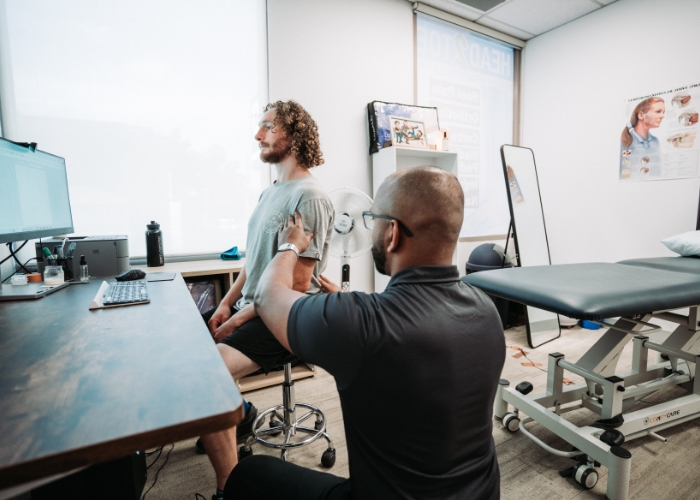
An ergonomic assessment looks at how your body interacts with your environment—whether that’s your workstation, driving position, or even how you sit at home. Our physiotherapists identify areas that may be placing stress on your body and provide tailored recommendations to reduce strain and improve comfort.
Yes! Prevention is key. Many people develop pain gradually due to poor posture or workstation setups. An ergonomic review can help you avoid future problems and support long-term spinal health.
When your body is forced into awkward or sustained positions, certain muscles and joints are overloaded while others weaken. Over time, this imbalance leads to fatigue, stiffness, and injuries such as back pain, neck pain, or repetitive strain injuries.
Anyone spending long hours sitting, standing, or repeating the same movement can benefit. This includes office workers, students, drivers, tradies, athletes, and older adults. Ergonomics helps both with recovery from existing injuries and preventing new ones.
You’ll receive a postural assessment, workstation or activity review, muscle and movement testing, hands-on treatment if needed, and a personalised plan. You’ll also learn practical tips—like how to adjust your chair, screen, and keyboard—to feel immediate improvements.
Absolutely. Our physiotherapists combine hands-on treatment, exercise programs, and lifestyle advice with ergonomic adjustments to help you recover faster and prevent your pain from coming back.
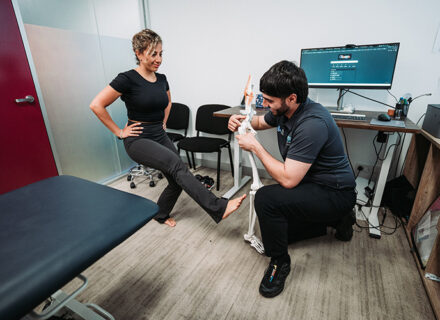
Buttock or lower back pain can come from the SIJ, the spine or the hip. Here is how our physios tell them apart, and what treatment involves.
Learn More
EPC plans (now called GP Chronic Condition Management Plans) give you up to 5 Medicare-subsidised physio or podiatry sessions each calendar year. Here's how they work at Head2Toe — eligibility, how the calendar-year allocation and carry-over rules work, claiming through Tyro, and answers to the most common questions.
Learn More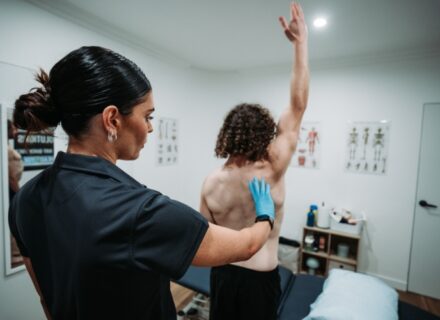
A physio’s guide to frozen shoulder (adhesive capsulitis) – symptoms, causes, the 3 stages, how long it lasts and treatment options.
Learn More
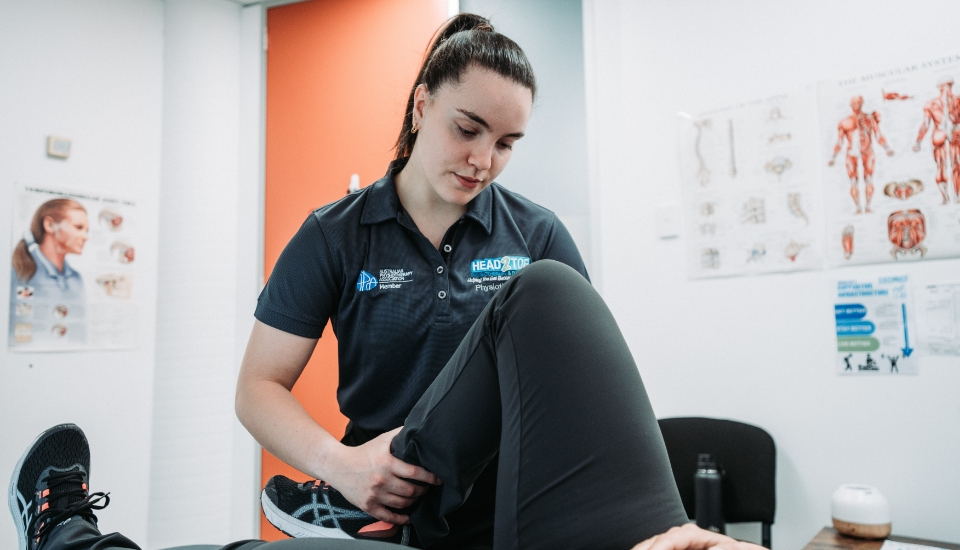
Physiotherapy is the assessment, diagnosis and treatment of musculoskeletal injuries. Some of the conditions we treat in Melbourne include:


 42 Pascoe Vale Road, Moonee Ponds 3039
Suite 1, Level 1, 30 Sydney Road Brunswick Victoria 3056 Australia
1407 Burke Road, Kew 3102
42 Pascoe Vale Road, Moonee Ponds 3039
Suite 1, Level 1, 30 Sydney Road Brunswick Victoria 3056 Australia
1407 Burke Road, Kew 3102