Aug. 22, 26
5 Common Running Injuries and How Sports Physiotherapy Keeps You on Track
Training for a marathon or chasing a new personal best, only to be sidelined by ...
Learn More

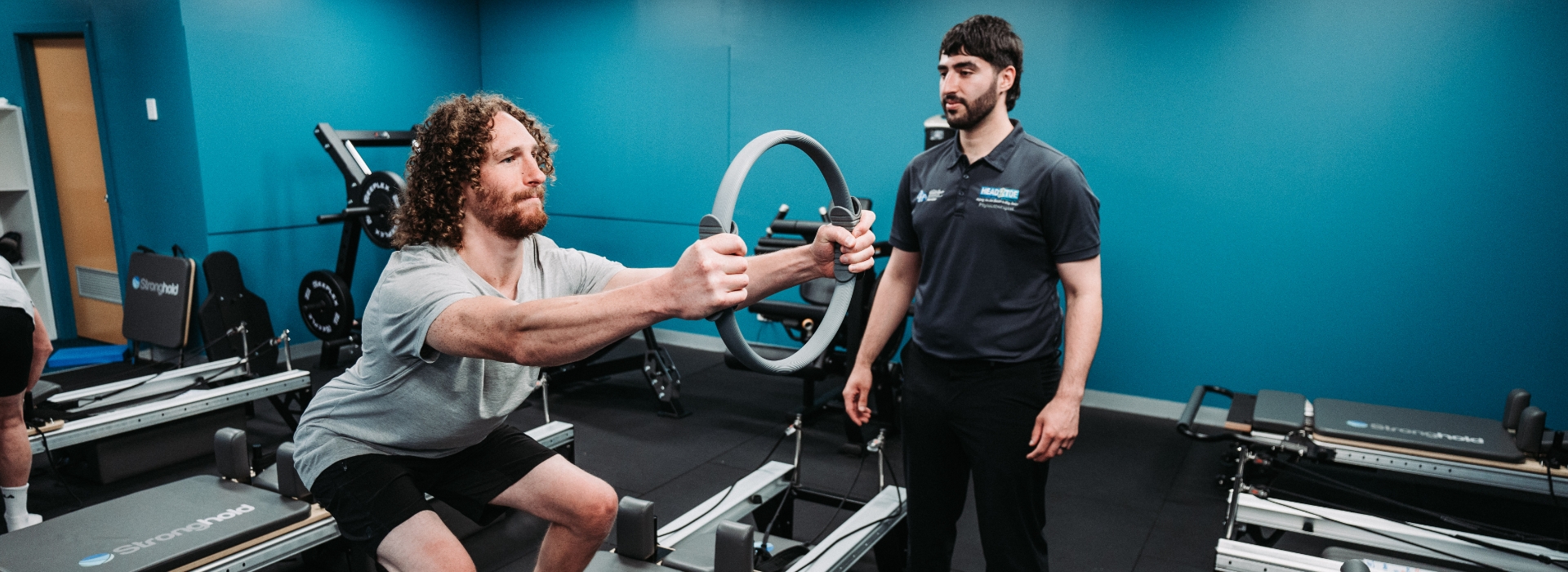








Clinical Pilates at Head2Toe is a tailored, physiotherapist led exercise program designed to support recovery from injuries and address individual physical needs such as improving strength, flexibility, posture and balance.
Spine / Core
Hip & Pelvis
Lower Limb
Upper Limb
Other
At Head2Toe, many people come to Clinical Pilates once their acute pain has settled, as part of our philosophy to get better, stay better, and live better. We see Pilates as the bridge between recovery and long-term strength, helping patients build confidence in movement, reduce fear, and learn to use their bodies in a safe, effective way.
Beyond rehab, Clinical Pilates is also a proactive tool, even if you’re not in pain, it’s about preventing future injuries, improving strength, and supporting you to keep doing the things you love for the long term.
At Head2Toe, we pride ourselves on our patient-centred approach. Every Clinical Pilates program is individually tailored by our physiotherapists to suit your unique needs, abilities, and goals. That means in our classes, you’re not just following what the person next to you is doing, you’re following a plan that’s right for you.
We understand that everyone is at a different stage in their health journey, and our focus is always on quality over quantity. That’s why our sessions run for 30 minutes, short, sharp, and effective. You’ll be working hard the entire time, without wasting a moment.
Our classes are welcoming to all ages, fitness levels, and abilities, from athletes and weekend warriors to older adults and those simply looking to move and feel better. At Head2Toe, Clinical Pilates is for everyone.
And while we take your health seriously, we also make sure it’s fun. Expect upbeat music, supportive physios, and a warm, engaging atmosphere where you can connect with others on their own journeys. We’re here to help you get better, stay better, and live better.
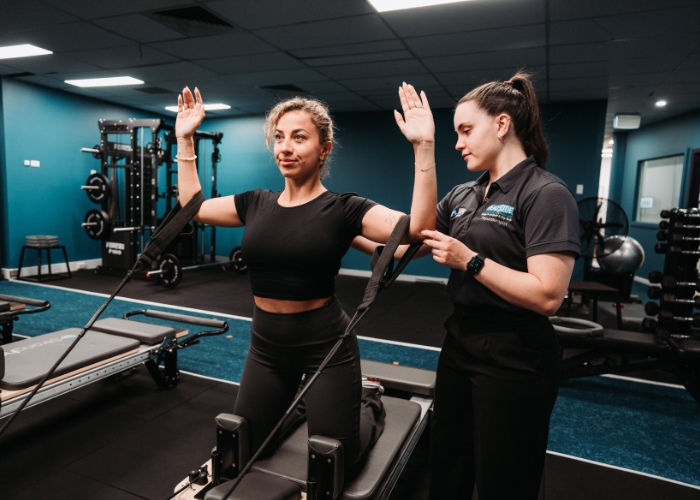
Our programs combine Clinical Pilates with evidence-based resistance training to help you move better, get stronger, and stay pain-free.
Examples you might do in class:
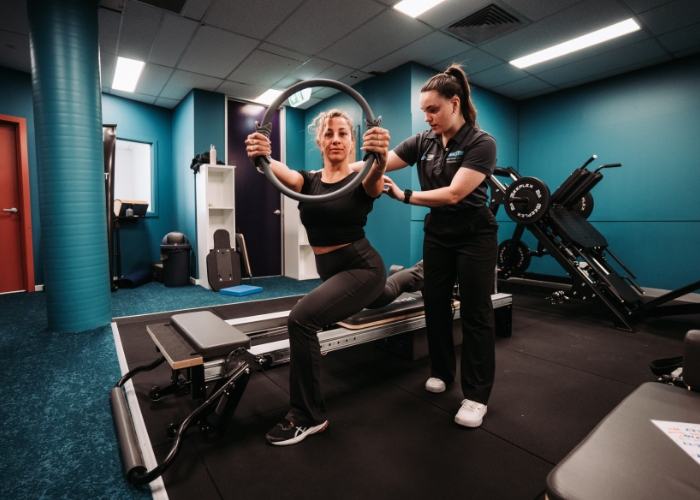
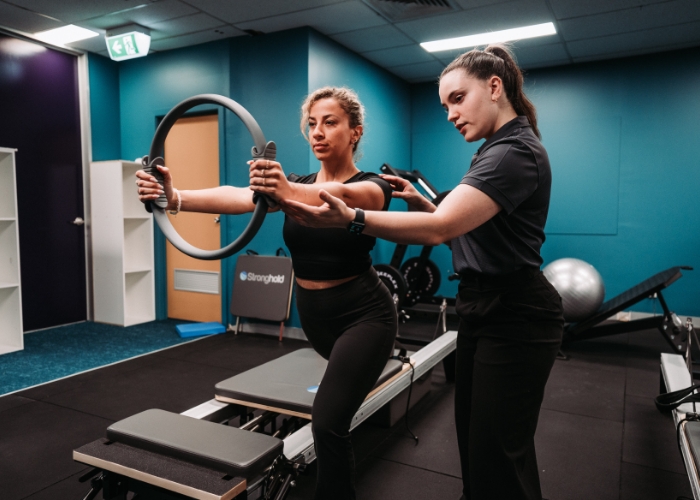
At your first Clinical Pilates class at Head2Toe, your physiotherapist will welcome you into the Pilates and exercise room, where you can store your personal belongings and remove your shoes. You’ll be assigned a reformer, and your physiotherapist will guide you through your individualised exercise program, ensuring you feel comfortable and confident.
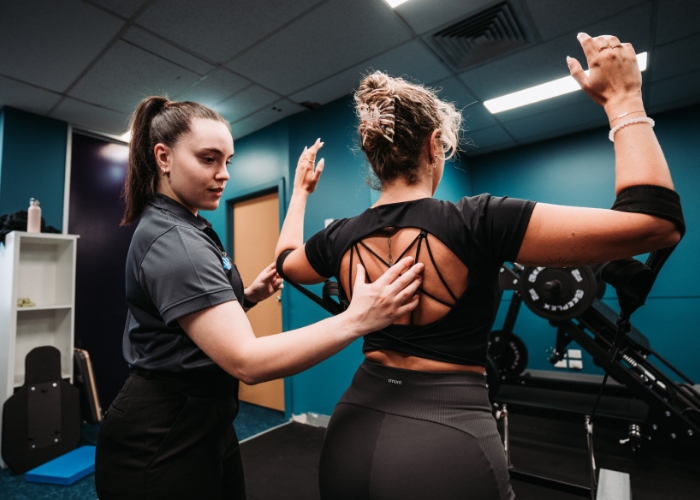
During the 30-minute session, you’ll work through your tailored program with hands-on guidance from your physio, who will focus on your form, technique, and muscle activation. You can expect clear, supportive communication, with your physio regularly checking in on the difficulty level of each exercise, whether it’s feeling easy, moderate, or hard, to ensure you’re appropriately exerting yourself.
Your physio will also monitor your injury throughout the session, ensuring the exercises are safe and not causing any undue pain. At the end of the class, you’ll wipe down your reformer and workstation, wrapping up a focused and effective workout.
Call out different groups: – Kids with recurring toenails – Diabetics with infections – Athletes or tradespeople on their feet all day
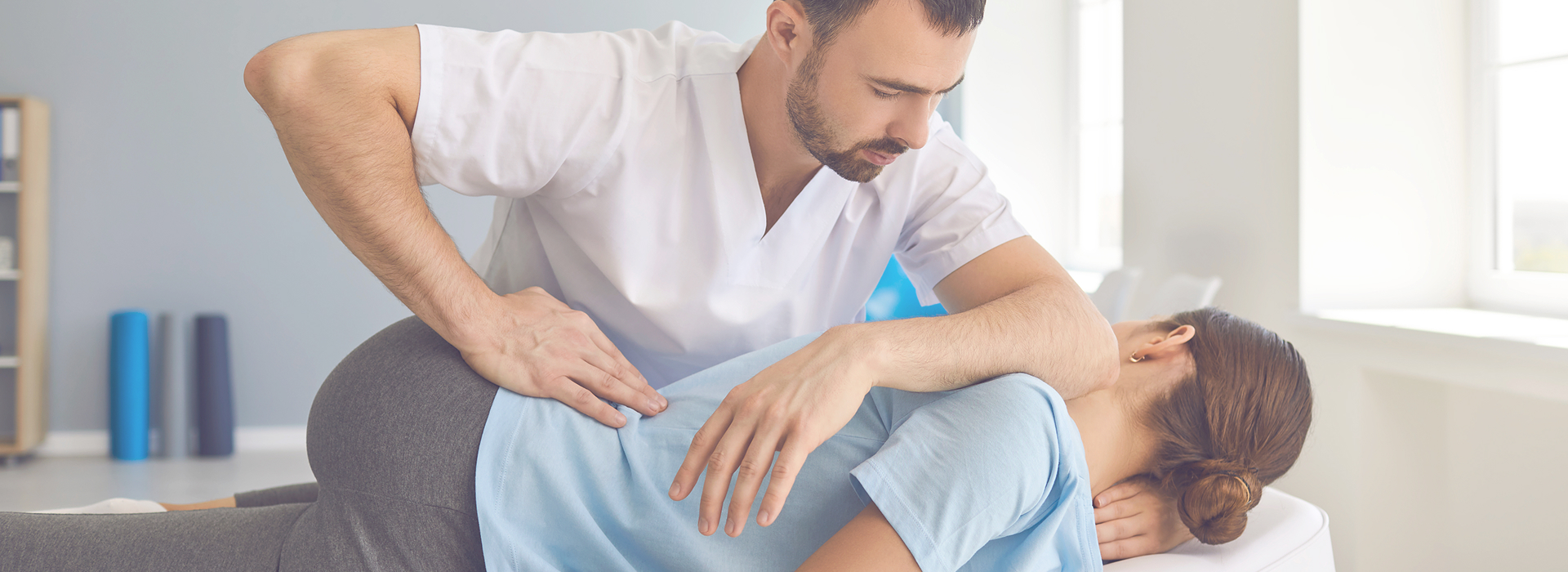
Clinical Pilates is led by physiotherapists or other qualified health professionals and tailored to your specific injuries, conditions, or goals. It focuses on rehabilitation, improving movement patterns, and preventing recurrence of pain. While, regular Pilates is typically run in a fitness setting, with a focus on general fitness, flexibility, and strength, without individualised clinical assessment.
We combine resistance training with Clinical Pilates because research shows that progressive loading is essential for strength, recovery, and long-term results. Pilates builds control, stability, and mobility, while resistance training adds higher loads for muscle and tendon adaptation. Together, they create a safe, evidence-based pathway from injury rehabilitation to full fitness and performance.
Most people benefit from 1–2 sessions per week. This provides consistency to improve strength, mobility, and control, while still allowing recovery time.
The Australian Physical Activity Guidelines recommend adults complete:
Clinical Pilates counts towards your strength/resistance training, and when combined with walking, cycling, swimming, or other exercise, it can help you meet the national guidelines for overall health and wellbeing.
How often you should do Clinical Pilates also depends on your current level, goals, and whether you’re recovering from an injury. This is why a physiotherapy assessment is important, it helps determine the right dosage of exercise and ensures your program is tailored to your needs for the best results.
Yes, in certain circumstances:
We offer both options:
Prices may vary depending on the option you choose. Please check our terms and conditions at reception for full details.
Reformer Pilates uses a specialised machine with springs and pulleys, providing resistance and support. This allows for greater variety, progression, and adaptability, especially useful in rehab.
Mat Pilates is performed on the floor with bodyweight, small props, and sometimes light resistance. It’s more accessible but can be harder for people with injuries or movement limitations.
Clinical Pilates can support weight loss by building muscle strength, improving posture, and increasing overall activity levels. However, it’s not a high-calorie-burning workout on its own. For best results, Pilates should be combined with cardiovascular exercise and healthy nutrition.
At our clinic, you can choose between:
Prices vary depending on the option you choose.
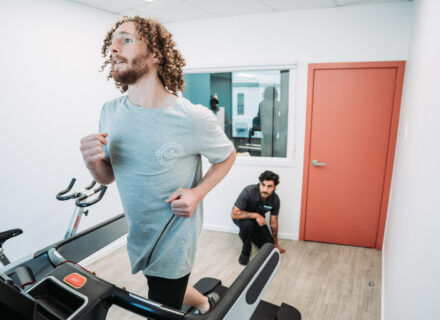
Training for a marathon or chasing a new personal best, only to be sidelined by ...
Learn More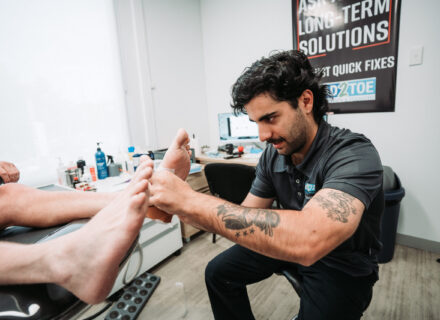
Many people ignore foot pain until it becomes serious. This can lead to long-term, complex ...
Learn More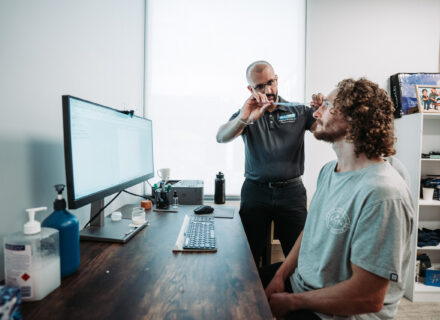
What Is Neck Pain? How Common Is it? Neck pain includes discomfort, stiffness, or soreness ...
Learn More
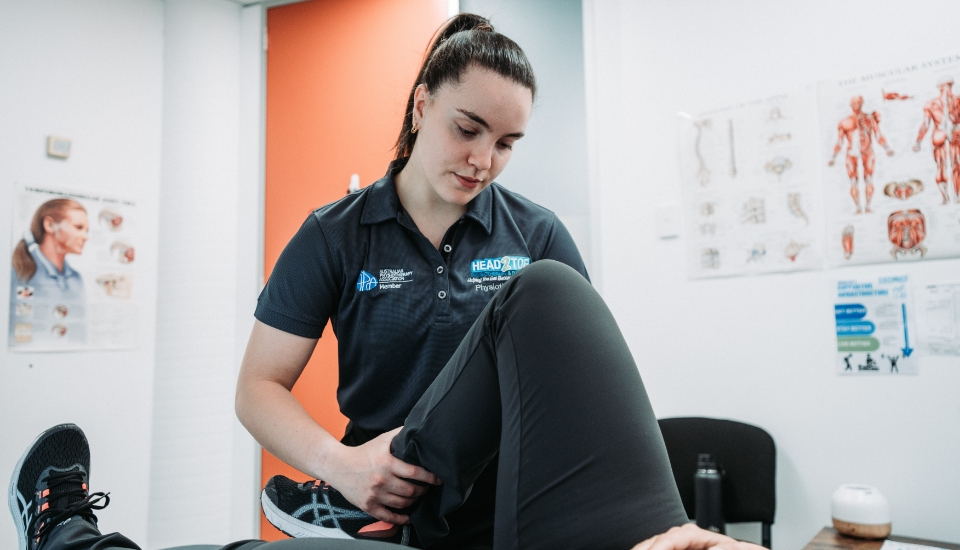
Physiotherapy is the assessment, diagnosis and treatment of musculoskeletal injuries. Some of the conditions we treat in Melbourne include:


 42 Pascoe Vale Road, Moonee Ponds 3039
Suite 1, Level 1, 30 Sydney Road Brunswick Victoria 3056 Australia
1407 Burke Road, Kew 3102
42 Pascoe Vale Road, Moonee Ponds 3039
Suite 1, Level 1, 30 Sydney Road Brunswick Victoria 3056 Australia
1407 Burke Road, Kew 3102