




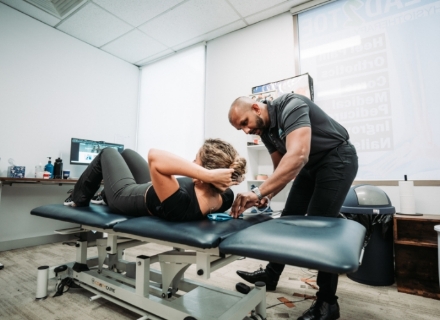
Rehab and Exercise
Tailored exercise programs to ease pain, rebuild strength and mobility, and prevent re-injury through safe, progressive routines adapted to your condition.
Learn More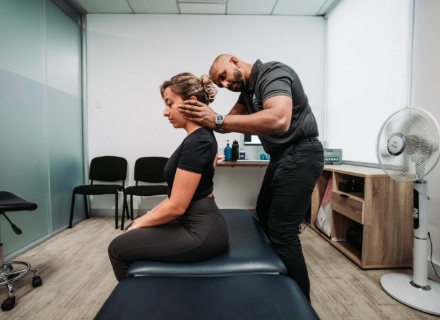
Concussion Management
Comprehensive assessment and staged, evidence-based rehabilitation to manage symptoms and support a safe, confident return to sport, study, or work.
Learn More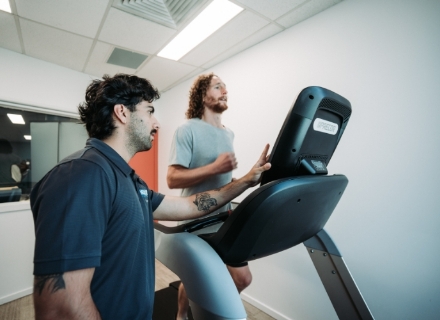
Running
Detailed gait analysis to identify biomechanical issues, paired with strength training, technique coaching, and rehab to reduce injury risk and boost performance.
Learn More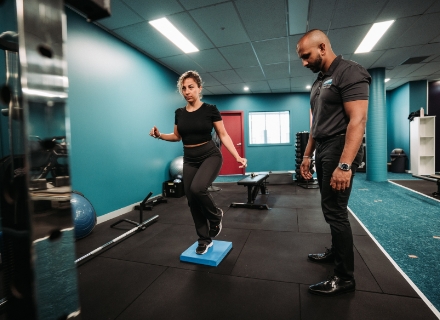
Return to Sport
A structured program guiding athletes from rehab back to competition through staged progressions and sport-specific conditioning to minimise re-injury risk.
Learn MoreSports physiotherapy is a specialised area of physiotherapy that focuses on the prevention, assessment, treatment, and rehabilitation of injuries related to sport and physical activity. It’s not just for elite athletes, anyone who is active, from recreational exercisers to weekend warriors can benefit.
Key aspects include:
- Injury prevention: designing programs to reduce risk of common sporting injuries (e.g., ankle sprains, hamstring tears).
- Assessment & diagnosis: identifying the type and severity of injury through movement tests and clinical reasoning.
- Treatment & rehabilitation: using manual therapy, exercise-based rehab, and modalities (e.g., taping, dry needling) to restore function.
- Return-to-sport planning: safely guiding athletes back to training and competition, often using graded loading and sport-specific drills.
- Performance optimisation: improving strength, flexibility, endurance, and biomechanics to enhance performance.
- Education: teaching athletes about load management, recovery strategies, and injury risk reduction.
You don’t need to be an elite athlete to see a sports physio, if you’re active and want to move better, we’re here to help. Whether you’re coming back from injury, preventing the next one, or chasing a PB, our sports physios help you get back to what you love, being pain-free, confident, and stronger.
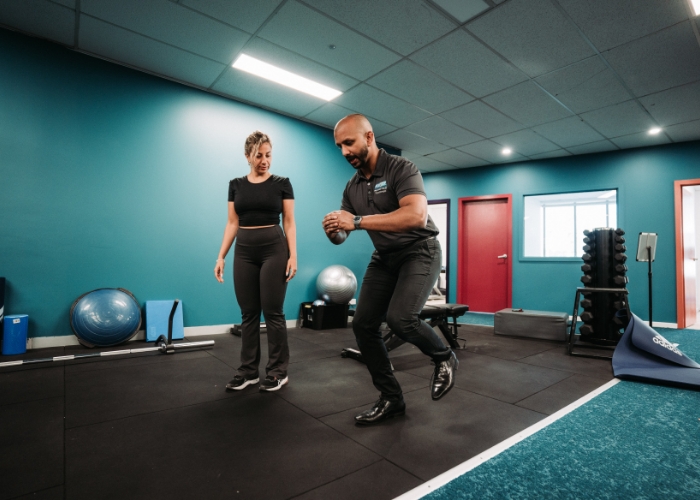
Common Signs and Symptoms
You don’t need to wait for a serious injury, seeing a sports physio early can save you time and prevent things from getting worse.
Some common signs and symptoms include:
- Ongoing or sharp pain during training or games
- Swelling, stiffness, or loss of range of motion
- “Niggles” that keep returning when you increase your training load
- Weakness, loss of power or speed
- Feeling unstable or hesitant with cutting, landing, contact or overarm throwing
- Post-match soreness that lasts longer than expected
- Recurrent twinges or injuries in the same area
- Concerns after an acute injury (sprain, strain, muscle tear, joint injury, concussion)
- Wanting to prevent injury when starting a new sport, increasing training, or returning after time off
Causes / Why It Happens
Sports injuries usually come from a mix of training load errors, technique changes, strength or mobility deficits, and insufficient recovery.
Example: a sudden increase in running volume or intensity can overload tissues that aren’t ready yet; poor landing mechanics can stress the knee; limited ankle mobility can push forces up the chain.
Why Choose Head2Toe?
Highly skilled sports physios – Experience across community, academy, and elite sport levels. Our physios have worked with athletes across a wide range of sports, including: Soccer, football, rugby, netball, athletics, cricket, tennis, baseball and more.
Dual-qualified clinicians – our physios are not only trained in physiotherapy but also hold:
- ASCA Level 1 Strength & Conditioning Coaching
- APA Sports Physiotherapy Level 1 accreditation
- Degrees in Sports and Exercise Science
This unique mix means they can blend injury rehab with performance programming, supporting you from recovery all the way to peak performance.
Personalised rehab plans – tailored to you, with clear stages and measurable milestones so you know exactly where you’re at.
Performance focused – we don’t just treat the injury, we look at the whole athlete to help you recover stronger. Our goal is to get you back to your sport not just playing, but performing at your very best.
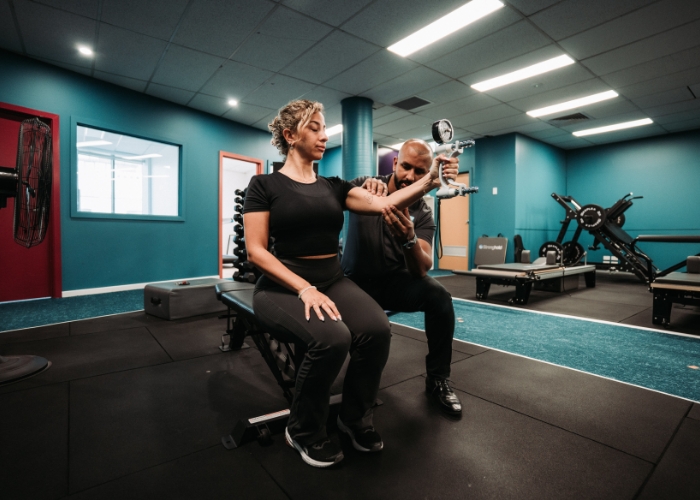
Return-to-sport testing – we use objective assessments, including strength testing and dynamometry, to measure your recovery. These tests help ensure you return to training and competition safely and confidently.
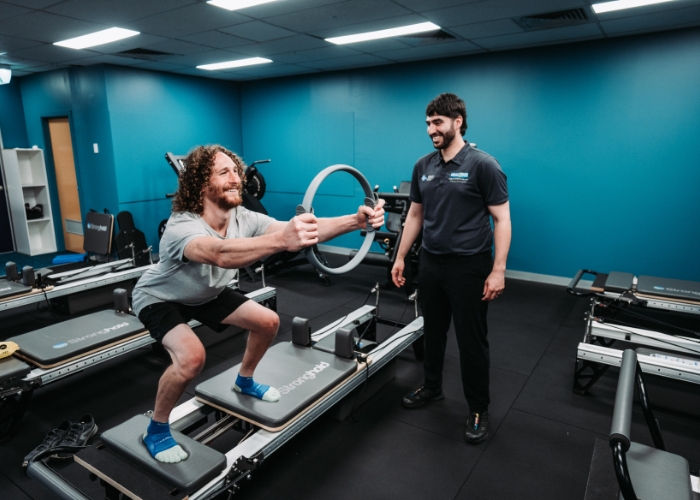

How We Treat It
1) Conservative care
- Accurate assessment & diagnosis (movement, strength, control)
- Manual therapy and joint mobilisations/manipulations as indicated
- Exercise therapy: mobility, strength, control, plyometrics
- Taping & bracing to support return to training
- Load management and training plan integration
2) Return to Sport Assessment (RTS)
- Strength benchmarks (e.g., limb symmetry)
- Balance & control (e.g., Y-balance, single-leg tasks)
- Power & plyometrics (jump/land quality, RSI focus)
- Change of direction, acceleration/deceleration, (multidirectional movement)
- Sport-specific drills that mirror your position and competition demands
3) Post-surgery & advanced rehab
- Criterion-based progressions (ROM → strength → power → agility)
- Integrated running and conditioning frameworks
- Performance enhancement to reduce re-injury and boost confidence
What to Expect in Your Appointment?
Initial appointment : Your first appointment is all about understanding you, your sport, and your injury so we can create a plan to get you back performing at your best. Here’s what typically happens:
- Detailed history and discussion – we ask questions about your injury, how it happened, your training load, and the demands of your sport.
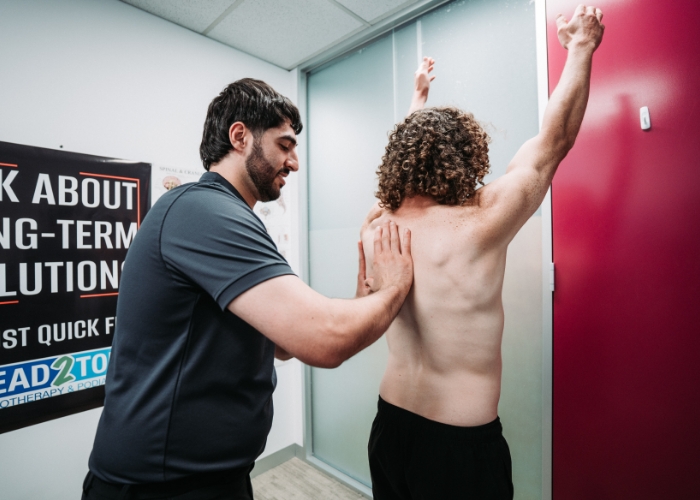
- Movement and physical assessment – testing your strength, range of motion, control, and power to identify the source of your problem.
- Clear diagnosis – we explain what’s causing your symptoms and how it affects your performance.
- Personalised treatment plan – we outline short-term goals (first 2–4 weeks) and long-term goals (6+ weeks) tailored to your needs.
- Exercise program – getting you started on a safe and progressive rehabilitation plan to recover, prevent re-injury, and improve performance.
By the end of your first session, you’ll have a clear understanding of your injury, your rehab journey, and how we’ll help you get back to performing at your best.
Follow-ups:
Follow-up appointments are all about progressing your rehab and making sure you’re on track to return to your sport safely and performing at your best.
- Ongoing assessment – we may use strength testing, dynamometry, or jump and balance assessments to track your recovery and measure improvement.
- Movement analysis – we continue to understand how you move, looking not just at the injured area but also the joints above and below to identify any contributing issues.
- Progressive rehab – your exercises and program are adjusted based on your progress, aiming to restore strength, control, power, and confidence.
- Goal review – we regularly review your short-term and long-term goals, ensuring you’re moving closer to full performance.
Each session builds on the last, helping you move better, recover fully, and reduce the risk of re-injury.
Highlight Patient Types
- Field & court athletes (football, soccer, netball, rugby, basketball, hockey)
- Runners & triathletes (track, road, trail)
- Strength & power athletes (gym, CrossFit, powerlifting, hyrox)
- Younger athletes returning to school or club sport
- Tradies & active workers on their feet all day
- Weekend warriors chasing consistency without setbacks
Frequently Asked Questions
Does treatment hurt?
Most sessions are comfortable. Some strength work or tissue techniques may feel challenging but should be safe and tolerable.
How long until I’m back?
It depends on the tissue involved and your starting capacity. We use criteria (not just time) so you return when you’re ready, not just when the calendar says.
Do I need a scan?
Often no. Many sports injuries are diagnosed clinically. If imaging will change management, we’ll organise it.
What if my pain keeps coming back?
We’ll check load, technique, and strength balance. Small changes to programming and targeted strength can fix recurring issues.
Can you work with my coach or PT?
Yes! We’re happy to collaborate with your coach or PT, providing clear guidelines on your progressions, limits, and goals so we’re all working together to get you back performing at your best.
What’s the difference between a physio and a sports physio?
A physiotherapist treats a wide range of injuries and conditions affecting movement and function. A sports physiotherapist has additional training and experience in managing injuries specific to athletes and active individuals. They focus on performance, safe return to sport, injury prevention, and often work closely with coaches and trainers.
What does a physiotherapist do in sport?
In sport, physiotherapists:
- Assess, diagnose, and treat sports injuries
- Provide tailored rehabilitation programs
- Use hands-on therapy, exercise, and load management to restore performance
- Work on injury prevention strategies (strength, conditioning, movement retraining)
- Support athletes on the sideline or in training/competition environments
How many years does it take to become a sports physiotherapist?
Becoming a physiotherapist in Australia usually takes 4–5 years of university study (Bachelor or Master’s entry). To specialise in sports physiotherapy, additional postgraduate study, clinical experience, and recognition by the Australian Physiotherapy Association (APA) are needed—often taking another 2-4 years. In total, it can take 6–9 years to be formally recognised as a sports physiotherapist.




 42 Pascoe Vale Road, Moonee Ponds 3039