info@head2toe.com.au
  03 9326 0168



How to relieve neck pain from sitting at a desk?

What Is Neck Pain? How Common Is it?
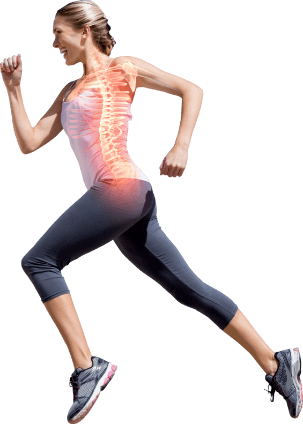
Neck pain includes discomfort, stiffness, or soreness felt between the base of the skull and the top of the shoulders. It may stay localised to the neck or spread into the shoulders, upper back, head, or arms. Neck pain is very common and is one of the leading causes of disability worldwide. Research shows that between 15% and 50% of adults experience neck pain each year, with office workers particularly affected — up to 60% report symptoms within a 12-month period (1,2).
Although many episodes settle within weeks, neck pain often returns if contributing factors such as prolonged sitting, poor workstation setup, or muscle weakness are not addressed (2,3).
At Head2Toe Physiotherapy & Podiatry, we understand how neck pain can disrupt your work, sleep, and daily life. We focus on identifying the root cause and guiding you through evidence-based treatments to reduce pain, restore function, and prevent recurrence.
Symptoms
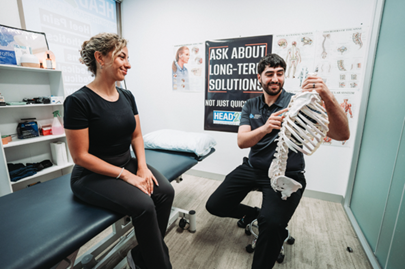
Neck pain can show up in various ways. Common symptoms include:
• A constant ache or tightness in your neck
• A sharp pain when you turn or move your head
• Tight or knotted muscles along your shoulders or between your shoulder blades
• A feeling that your neck is “stuck” or hard to move
• Headaches starting at the back of your head
• Pain that spreads into your shoulder or down your arm
• A tired, heavy feeling in your neck after sitting at a desk for a long time
Some people might also feel dizzy or unbalanced, especially if muscle tension or joint stiffness is involved (9).
Symptoms can get worse after long periods of sitting, using a computer, or looking down at a phone (3).
Common Conditions and What They Are
Mechanical Neck Pain – The most common type. It usually comes from irritated muscles or joints, often made worse by prolonged sitting or staying in one position (4).
Myofascial Pain Syndrome – Caused by tight muscle “knots” (trigger points) that can refer pain into the head, shoulders, or upper back (4).
Cervicogenic Headache – A headache that starts from the neck. It is often one-sided and worsens with neck movement or sustained posture (8).
Cervical Radiculopathy – Occurs when a nerve in the neck becomes irritated or compressed, causing arm pain, numbness, tingling, or weakness (4).
Degenerative Changes – Age-related disc or joint changes that may contribute to stiffness but are often normal findings (4).
Causes and Risk Factors for Neck Pain
• Prolonged sitting (2)
• Forward head posture (7)
• Muscle weakness or reduced endurance (3)
• Repetitive or sustained arm positions (2)
• Stress and muscle tension (3)
• Lack of movement or sedentary lifestyle (3)
• Female sex
• Middle age
• Office or computer-based work (2)
• Poor workstation setup (2)
• High job strain or low job satisfaction (2)
• History of headaches or migraines (8)
• Previous neck injury (4)
When to Seek Medical Attention (Red Flags)
Neck pain is rarely caused by serious disease. However, urgent medical attention is recommended if you experience:
• Recent significant trauma (e.g., car accident, fall)
• Progressive numbness, weakness, or coordination issues
• Loss of bladder or bowel control
• Unexplained weight loss
• Fever or signs of infection
• History of cancer with new neck pain
• Severe, constant night pain
• Sudden severe headache with neck stiffness
These situations are uncommon but require prompt intervention (5).
What Are Some Tips to Maintain a Pain-Free Workspace?
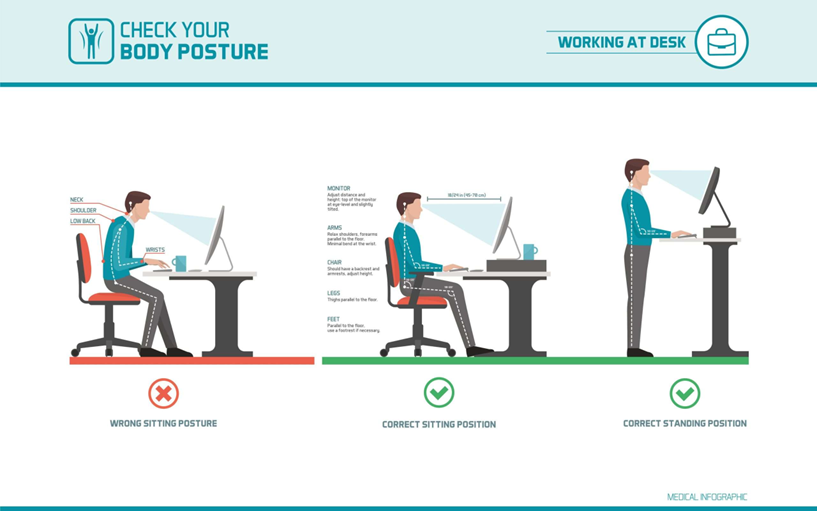
1. Position Your Screen at Eye Level
Your screen should be directly in front of you, with the top third roughly at eye height. If your screen is too low, you will naturally bend your neck forward, increasing load on the cervical spine. Even a small forward shift of the head increases the stress placed on neck muscles (7). Use a monitor riser or laptop stand if needed.

2. Keep Your Keyboard and Mouse Close
Reaching forward or to the side for your mouse increases shoulder and neck muscle activity. Your elbows should rest comfortably by your sides at roughly 90 degrees. Keeping your keyboard and mouse close reduces tension in the upper trapezius and shoulder stabilisers (2).
3. Support Your Lower Back
While neck pain is the focus, spinal alignment matters. A chair that supports your lower back helps maintain a neutral spine, reducing compensatory forward head posture (7). Sit back into your chair rather than perching at the edge.
4. Avoid Staying in One Position Too Long
Research suggests that sustained posture — even “good posture” — is a major contributor to discomfort (2). The neck tolerates movement better than prolonged stillness. Aim to change positions every 30–60 minutes. Stand up, roll your shoulders, gently move your neck, or take a short walk.
5. Build Strength, Not Just Posture Awareness
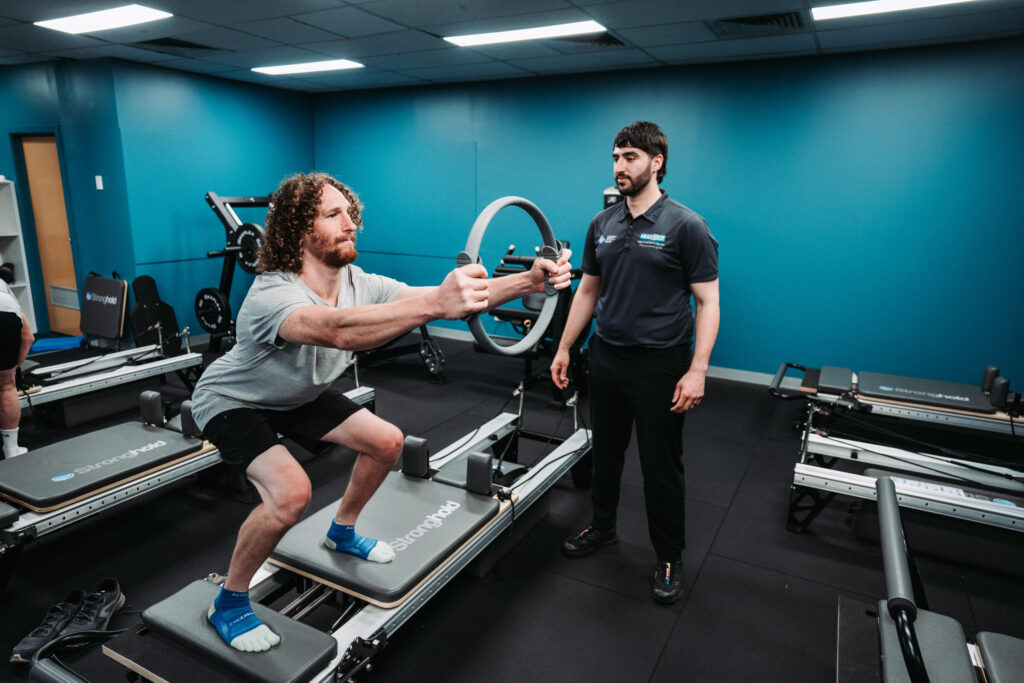
Ergonomics alone is not enough. Studies show that strengthening exercises for the neck and shoulders are particularly effective in reducing neck pain in office workers (3). Improving endurance of the deep neck muscles and shoulder stabilisers helps your body cope better with long periods of desk work.
6. Adjust Laptop Use
If you use a laptop for long periods, consider an external keyboard and mouse. This allows you to elevate the screen without raising your arms. Looking down at a laptop for hours significantly increases neck load (7).
7. Reduce Phone Strain
Holding your phone at chest level encourages neck bending. Try lifting your phone closer to eye height when reading or texting. Avoid prolonged scrolling with your head down (7).
8. Manage Stress and Muscle Tension
Research highlights a link between work-related stress and persistent neck pain. Stress increases muscle tension and pain sensitivity (3). Incorporating brief breathing exercises, micro-breaks, or short walks during the workday can help reduce muscular tension.
9. Listen to Early Warning Signs
Mild stiffness, headaches starting at the base of the skull, or shoulder tightness are early signs your workspace or habits may need adjustment (4). Addressing these symptoms early prevents recurring or persistent pain.
10. Get Professional Guidance
An individual assessment can identify subtle contributors such as muscle weakness, endurance deficits, or movement patterns that increase strain. Physiotherapists can combine ergonomic advice with targeted strengthening, manual therapy, or dry needling if needed (3,4).
The Bottom Line
An ergonomic workspace is not about sitting perfectly still with rigid posture. It is about reducing sustained strain, encouraging regular movement, and building strength so your neck can tolerate daily demands. When workstation adjustments are combined with targeted exercise, the evidence shows better outcomes and reduced recurrence of neck pain (3).
How Physiotherapy Can Help
Physiotherapy aims to identify and address the underlying contributors to neck pain rather than simply treating symptoms.
During an assessment, a physiotherapist may evaluate:
• Neck mobility: how well it moves
• Muscle strength and endurance
• Posture during work tasks or daily activities
• Workstation setup
• Nerve involvement
• Lifestyle and stress factors
At Head2Toe, we develop a personalised treatment plan to reduce pain, restore your function, and prevent recurrence.
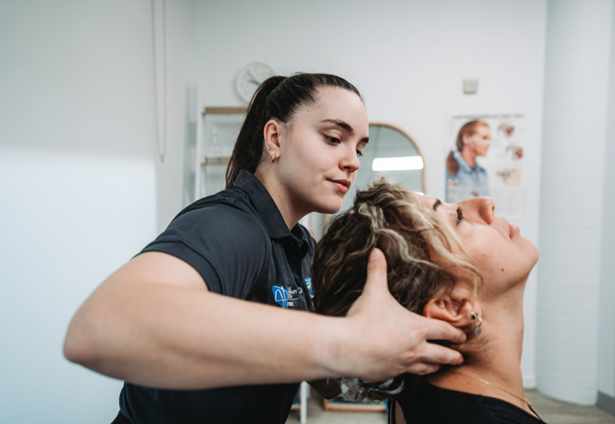
Why Head2Toe?
Neck pain is common, especially among those who spend long hours at a desk, but with the right approach, it can be managed effectively. The goal is not to achieve “perfect posture” but to build strength, improve muscle endurance, optimise your workstation, and add more movement to your day. At Head2Toe Physiotherapy & Podiatry, we focus on identifying the root cause of your neck pain using evidence-based methods and a thorough, individualised assessment. We then create tailored treatment plans and targeted exercises that maximise your recovery, minimise the risk of recurrence, and help you return to work and daily activities with confidence.
Contact us to book your physiotherapy session and get started on your recovery.
References
- Hoy D, Protani M, De R, Buchbinder R. The epidemiology of neck pain. Best Pract Res Clin Rheumatol. 2010;24(6):783-792.
- Ariëns GA, Van Mechelen W, Bongers PM, Bouter LM, Van Der Wal G. Physical risk factors for neck pain. Scand J Work Environ Health. 2000;26(1):7-19.
- Chen X, Coombes BK, Sjøgaard G, Jun D, O’Leary S, Johnston V. Workplace-based interventions for neck pain in office workers: systematic review and meta-analysis. Phys Ther. 2017;98(1):40-62.
- Cohen SP. Epidemiology, diagnosis, and treatment of neck pain. Mayo Clin Proc. 2015;90(2):284-299.
- Feller D, Chiarotto A, Koes B, Maselli F, Mourad F. Red flags for potential serious pathologies in people with neck pain: a systematic review of clinical practice guidelines. Arch Physiother. 2024;14:105-115.
- Al-Khazali HM, Krøll LS, Ashina H, Melo-Carrillo A, Burstein R, Amin FM, et al. Neck pain and headache: pathophysiology, treatments and future directions. Musculoskelet Sci Pract. 2023;66:102804.
- Nejati P, Lotfian S, Moezy A, Nejati M. Correlation between forward head posture and neck pain in office workers. Int J Occup Med Environ Health. 2015;28(2):295-303.
- Verma S, Tripathi M, Chandra PS. Cervicogenic headache. Neurol India. 2021;69(Suppl 1):S194-S198.
- Vural M, Karan A, Gezer İA, et al. Prevalence, etiology, and biopsychosocial risk factors of cervicogenic dizziness in patients with neck pain. Turk J Phys Med Rehabil. 2021;67(4):399-408.