




Key Takeaways
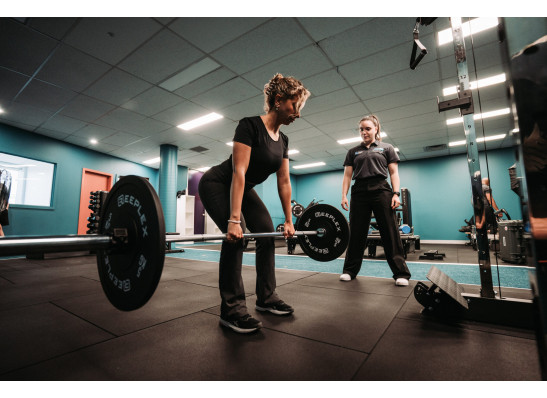
- Strength development follows three predictable physiological phases: neural adaptation (weeks 1–3), structural adaptation (weeks 4–6), and hypertrophy with increased capacity (week 6 onward), each requiring consistent, progressive loading.
- Stopping rehabilitation or training once pain settles—typically around weeks 2–3—cuts the process short before tissue strength has fully developed, significantly increasing your risk of re-injury.
- Progressive overload through gradually increasing weights, tempo, or movement complexity is essential, and physio-led Clinical Pilates and structured strength programs at Head2Toe provide safe, stepwise progression.
- Real strength isn’t built in days; it requires patience through each biological phase, with measurable gains typically accelerating after 6 weeks of consistent work.
- Readers across Melbourne’s inner north and inner east (Moonee Ponds, Brunswick, Kew, Pascoe Vale) can book a physiotherapy assessment at Head2Toe to begin a structured strength plan tailored to their goals and injury history.
What is strength development?
Strength development is the planned, progressive increase in how much force your muscles, tendons, and joints can safely produce and tolerate over time. It’s not about random gym sessions or occasional bootcamps—it’s a structured process with clear objectives, measurable milestones, and respect for your body’s biological adaptation timelines.
At Head2Toe Physiotherapy & Podiatry, strength development underpins most treatment plans. Whether you’re recovering from low back pain, rebuilding after ACL reconstruction, managing plantar heel pain, or returning to exercise postpartum, developing muscle strength is central to lasting recovery and resilience.
The key insight is that strength gains follow predictable biological stages. Your nervous system adapts first, then your tissues remodel, and finally visible muscle growth and capacity emerge. The rest of this article serves as your roadmap through these stages.
What strength development aims to achieve:
- Reduced pain and sensitivity during movement
- Increased tissue capacity to handle daily and sporting demands
- Improved performance in work, sport, and everyday activities
- Greater independence and confidence in your body
The physiology of strength development (weeks 1–6+)
Strength does not appear overnight. It emerges from nervous system changes first and tissue remodelling second, typically over 6 or more weeks of consistent work. Understanding this timeline helps you stay patient, disciplined, and committed to long-term results rather than stopping when pain first settles.
This section breaks down the process into three clear phases with timeframes, so you can see exactly where you are in your rehab or training journey. These timeframes describe minimum adaptation windows observed in research and clinical practice. Complex injuries or long-standing pain often require longer.
Phase 1 – Neural adaptation (weeks 1–3)
In roughly the first 1–3 weeks of a new strength training or rehab program, most improvement comes from the nervous system, not from bigger muscles. Your brain and spinal cord are learning to work more efficiently with the muscle fibres you already have.
During this phase, your nervous system learns to:
- Recruit more muscle fibres simultaneously
- Fire them in better sequence for coordinated movement
- Reduce unnecessary protective “braking” that lingers after injury
- Coordinate movement around painful or stiff joints
Consider a Moonee Ponds office worker whose squats feel smoother after just two weeks—the exercise hasn’t physically enlarged their quadriceps yet, but their neuromuscular control has improved dramatically. Or a runner whose single-leg calf raises feel more controlled despite no visible muscle size change.
This is usually when people feel “stronger” very quickly. But here’s the critical point: underlying tissues like tendons, ligaments, and cartilage are still catching up. They remain vulnerable if training stops or excessive loads are applied too soon.
At Head2Toe, physios deliberately focus on technique, movement quality, and comfortable load exposure in this phase. Think bodyweight hip hinges, light resistance band work, and Pilates-based core control. The goal is building foundational strength and movement competence before pushing intensity.
Phase 2 – Structural adaptation (weeks 4–6)
From about weeks 4–6 of consistent loading, the tissues themselves begin to remodel. This is where actual physical changes occur at the cellular level—something that cannot be accelerated beyond biological timelines, no matter how motivated you are.
During structural adaptation:
- Muscle fibres increase in cross-sectional area
- Tendons become more load-tolerant through collagen remodelling
- Connective tissue reorganises to handle higher demands
- Force production capacity genuinely improves
This is the stage where objective changes become measurable in the clinic. You might complete more reps at the same weight, handle higher reformer springs in Clinical Pilates, or demonstrate improved single-leg balance under load.
Structural changes involve protein synthesis, collagen turnover, and improved blood supply—processes that simply take time. Rushing them risks overload injuries and setbacks.
Practical example: A patient with patellar tendinopathy might progress from isometric holds in early weeks to slow, heavy leg presses or decline squats around the 4–6 week mark under physio supervision. The tendon is finally building capacity to tolerate greater loads.
Many people are tempted to stop here because pain is often much lower. But tissues are only just approaching the demands of normal life—let alone sport, heavy loads, or high-intensity training.
Phase 3 – Hypertrophy and capacity (6+ weeks)
Meaningful, visible muscle growth and substantial strength gains typically accumulate from week 6 onward, assuming consistent, progressive loading 2–3 times per week. This is where the hard work becomes genuinely apparent.
In this phase:
- Skeletal muscle fibres thicken through myofibrillar hypertrophy
- Neuromuscular coordination continues to refine
- Energy systems adapt to support sustained effort
- Overall capacity—strength, power, endurance—becomes noticeably higher
A recreational footballer in Brunswick might return to full training after 10–12 weeks of structured rehab. A 55-year-old from Kew who struggled with knee pain can now lift groceries, climb stairs, and garden without limitation.
This is where training shifts from pure “rehab” toward performance and long-term durability. Programming often involves heavier loads, compound exercise variations, and more demanding Clinical Pilates sequences that challenge multiple muscle groups simultaneously.
For chronic issues like long-standing low back pain or Achilles tendinopathy, continued strength work beyond 12 weeks is typically necessary to consolidate gains and minimise recurrence.
Why strength development takes time (and why stopping early backfires)
Here’s a pattern we see regularly at Head2Toe: pain improves in the first 2–3 weeks, patients feel “fixed,” and some are tempted to stop before structural strength is fully restored.
The problem? Pain is a poor proxy for tissue capacity.
Nerves can become less sensitive quickly—that’s actually part of neural adaptation. But muscles, tendons, discs, and ligaments still lag behind in strength for several more weeks. When you stop training because pain has dropped, you leave tissues that haven’t yet developed the capacity to meet your daily demands.
This means everyday activities—standing shifts at work, running after kids, weekend sport—can exceed the partially restored capacity of your tissues. The result is flare-ups, re-injury, and frustration.
Real scenario: A runner stops calf strengthening when Achilles pain drops from 7/10 to 1/10 at week 3. Feeling great, they resume 10 km runs. Within two weeks, pain returns—often worse than before—because the tendon never built sufficient capacity to handle the cumulative load of distance running.
Head2Toe treatment plans are designed to move beyond symptom relief into full strength restoration. We use regular re-assessment milestones (typically at weeks 3, 6, and 12) to track objective progress and ensure you’re building toward genuine resilience, not just temporary pain reduction.
Principles of effective strength development
Training effectively means working with your body’s natural adaptation timelines, not against them. Whether you’re a seasoned pro returning from injury or someone new to resistance training, these principles apply.
| Principle | What it means | Why it matters |
|---|---|---|
| Progressive overload | Gradually increasing demand over time | Drives continued adaptation and strength gains |
| Specificity | Training movements relevant to your goals | Ensures strength carries over to real-world activities |
| Adequate recovery | Allowing 48+ hours between heavy sessions | Permits tissue repair and adaptation |
| Technique quality | Maintaining proper form throughout | Prevents injury and maximises muscle recruitment |
Practical training guidelines:
- Train 2–3 non-consecutive days per week for strength development
- Work mostly in the 6–15 rep ranges for general strength and muscle mass
- Allow at least 48 hours recovery for heavily loaded muscle groups
- Adjust programs based on age, injury history, and specific goals
A 25-year-old footballer returning from ankle sprain needs different programming than a 60-year-old desk worker rebuilding bone density. At Head2Toe, every resistance training program is tailored to individual circumstances—there’s no one-size-fits-all approach.
Progressive overload done safely
Progressive overload means gradually increasing the challenge placed on muscles and connective tissue. This can happen through:
- Higher load (adding weight)
- More volume (additional sets or reps)
- Slower tempo (increased time under tension)
- More complex movements (single-leg variations, unstable surfaces)
- Greater range of motion
Concrete examples:
- Increasing a deadlift from 20 kg to 25 kg over 2 weeks
- Adding an extra set of squats each session
- Slowing eccentric phases in calf raises from 2 to 4 seconds
- Progressing from double-leg bridges to single-leg bridges
In a rehab setting, overload must be carefully dosed to avoid flares. We use pain scales (keeping discomfort at or below 3/10 during and after exercise), 24-hour response checks, and regular strength testing to guide progression.
This approach mirrors what elite sports strength programs use—adjusting variables week by week based on objective data and patient feedback. The goal is making gains at your own pace without “smashing yourself” or risking setbacks.
Technique, movement quality, and neuromuscular control
Especially in the early neural adaptation phase, the priority is learning to move well. Clean hip hinges, stable knees in squats, proper shoulder control in pressing and pulling movements—these foundations matter more than how much weight you’re lifting.
Common technique faults we address:
- Knee collapse (valgus) during squats and lunges
- Rounded lumbar spine in deadlifts and hip hinges
- Excessive rib flaring during overhead work
- Loss of pelvic control during single-leg exercises
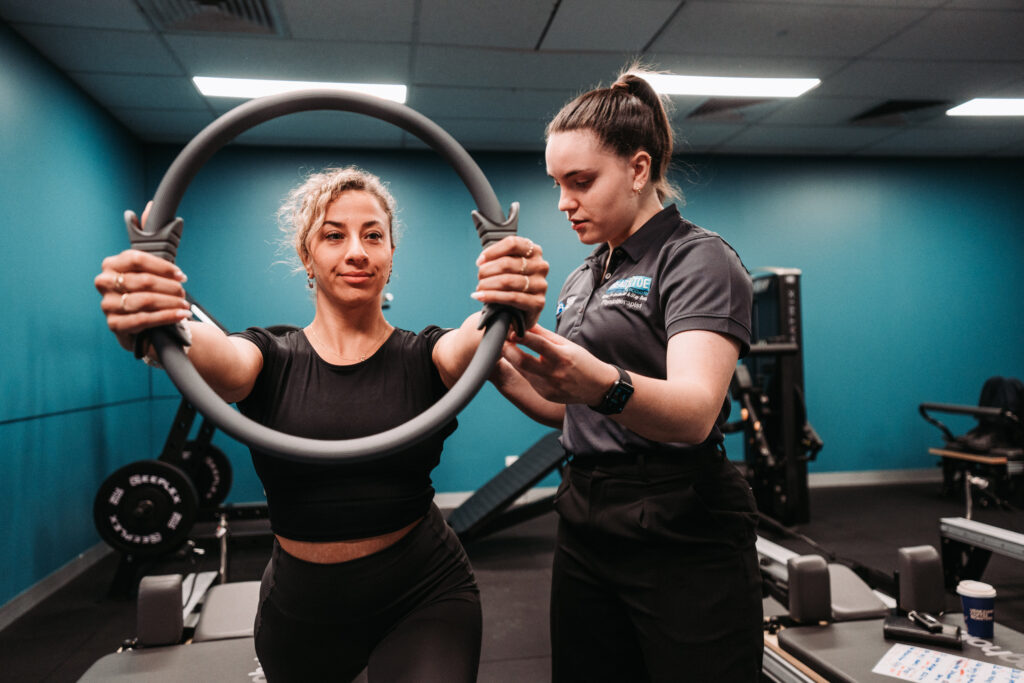
Physio-led Clinical Pilates at Head2Toe is used to refine control of the spine, pelvis, and shoulder girdle. These skills then integrate into more traditional strength training exercises with free weights or machines.
Good form doesn’t mean “perfect” or identical for everyone. It should reflect your unique anatomy and injury history while keeping key joints aligned and controlled. Prioritise slower, controlled movements with full range of motion before chasing heavier loads or advanced variations.
Types of strength training used in rehab and performance
Strength development isn’t limited to barbells and the gym floor. At Head2Toe, we use a mix of bodyweight exercises, free weights, resistance bands, machines, and Pilates equipment depending on your condition, goals, and what you have access to.
Main training categories:
| Type | Examples | Typical use |
|---|---|---|
| Bodyweight | Squats, push ups, bridges, planks | Early rehab, home programs, functional strength |
| External resistance | Dumbbells, barbells, kettlebells | Progressive loading, building muscle mass |
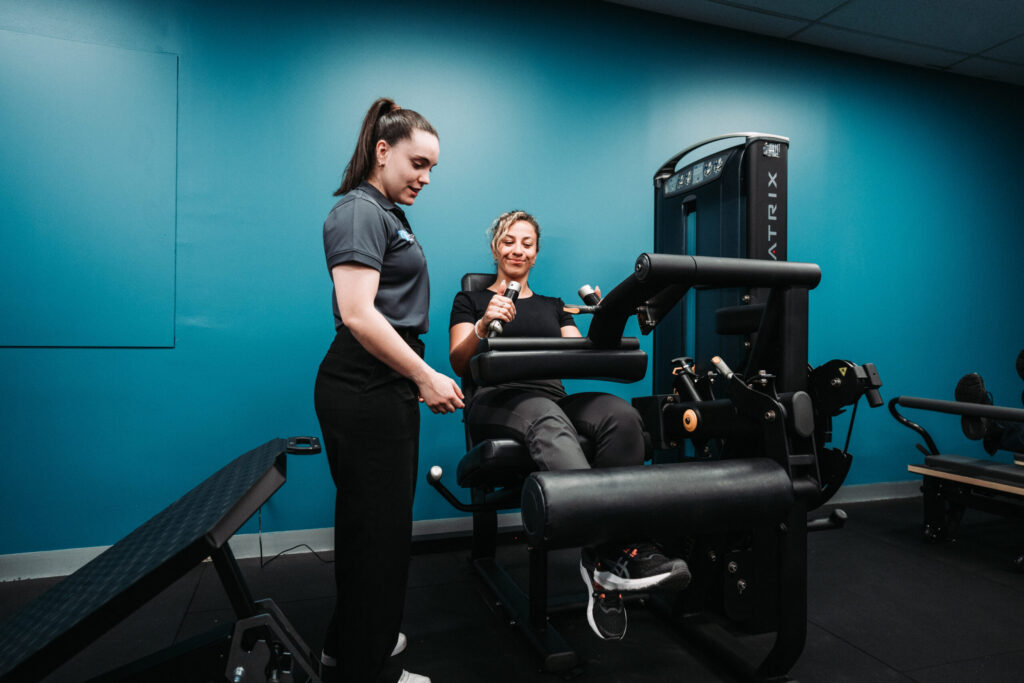
| Machine-based | Leg press, cable machines | Controlled loading, post-surgical rehab |
| Clinical Pilates | Reformer exercises, spring resistance | Core stability, spinal control, movement quality |
The goal is always functional transfer—building strength that carries over into walking, lifting, running, sport, or occupational tasks. Isolated muscle work has its place, but real-world resilience comes from training movements, not just muscles.
Bodyweight and functional strength movements
Functional, multi-joint movements form the foundation of strength training exercises at any age. Squats, hip hinges, step-ups, push ups, and rows train multiple muscle groups simultaneously and translate directly to everyday activities.
Movement examples and progressions:
- Squats: From supported sit-to-stands → bodyweight squats → goblet squats with light weights → barbell back squats
- Push-ups: From wall push-ups → incline push-ups → floor push-ups → plank-to-push-up variations
- Hip hinges: From bodyweight hinges → Romanian deadlifts with dumbbells → conventional deadlifts
- Lunges: From supported lunges → walking lunges → weighted lunges → explosive movements like jump squats
These compound exercise patterns enhance good posture, core stability, and capacity for everyday activities—lifting children, climbing stairs, prolonged standing at work, or carrying shopping.
For patients over 45, bodyweight training is often the safest and most accessible entry point into progressive strength training. It allows focus on proper form and movement quality before external loads are added.
Strength development across the lifespan
Strength development is relevant from adolescence through older age, but programming must respect life stage, bone health, and joint structures. A specific training protocol for a 20-year-old athlete looks very different from one designed for a 70-year-old with osteoarthritis.
How adaptation differs by age:
| Age group | Neural plasticity | Tissue response | Key focus |
|---|---|---|---|
| 20–35 | High | Rapid recovery | Performance, sport-specific strength |
| 35–55 | Moderate | Slower recovery | Injury prevention, maintaining muscle mass |
| 55+ | Lower but present | Requires patience | Falls prevention, bone density, independence |
Evidence consistently shows resistance training improves bone strength, balance, good posture, and independence in older adults—even when intensity is moderate. At Head2Toe, programs for older adults focus on falls prevention, stair-climbing ability, and everyday capacity like sit-to-stand and carrying groceries.
Younger populations may target sports performance, explosive movements, and higher-intensity loading. The principle remains the same: progressive overload matched to individual capacity and goals.
It is rarely “too late” to benefit from strength development under proper guidance. The significant benefits of weight training extend well into the 70s, 80s, and beyond.
Strength development after injury or surgery
Post-injury and post-surgical rehabilitation follows a staged approach that respects tissue healing timelines while progressively building capacity.
Typical stages:
- Acute management: Reducing pain and swelling, protecting healing tissues
- Early activation: Gentle movement, isometric exercises, restoring range of motion
- Progressive loading: Graduated resistance training, building muscle strength and endurance
- Return to activity: Sport-specific or work-specific conditioning, testing under realistic demands
Clinical examples:
- Ankle sprain (social netball player): Balance work progressing to calf raises, then running drills, then sport-specific agility
- Lumbar disc pain (35-year-old desk worker): Core control through Clinical Pilates, hip hinge patterning, then deadlift progressions
- Post-meniscal surgery (50-year-old): Quad activation, leg press progression, functional squat patterns, return to hiking
Head2Toe’s integrated physio and podiatry model is especially valuable for lower body injuries. Foot mechanics, footwear, and orthotics influence how strength loads travel up the kinetic chain. Addressing these factors ensures your full body is prepared for progressive loading.
Timelines vary depending on injury severity, healing capacity, and goals. But structured strength progression is always preferable to simply waiting for pain to subside and “hoping for the best.”

How Head2Toe Physiotherapy & Podiatry structures strength development
At our clinics across Moonee Ponds, Brunswick, Kew, Pascoe Vale, and surrounding suburbs, strength development follows a structured, measurable process designed to move you from pain relief toward genuine resilience.
Our typical process:
- Initial assessment: Detailed history, movement screening, baseline strength testing
- Goal-setting: Clear, measurable objectives matched to your life and activity demands
- Staged programming: Progression through neural, structural, and hypertrophy phases
- Periodic re-testing: Objective measurement at 3, 6, and 12 weeks
- Transition planning: From one-on-one sessions to Clinical Pilates groups or independent gym work
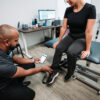
One-on-one private room consultations allow detailed movement analysis and individualised cueing. When appropriate, patients transition into small-group Clinical Pilates (maximum 5 per class) or gym-based programs with clear exercise prescriptions.
Our integrated model means cross-referral between physiotherapy and podiatry happens seamlessly when foot and ankle mechanics, orthotics, or gait issues need addressing. Lower body strength depends on a stable foundation—we ensure the whole kinetic chain is working together.
Assessment, measurement, and tracking progress
Objective measurement removes guesswork from strength development. We want to show you exactly how much stronger you’ve become, not just tell you that you’re “doing well.”
Key assessment components:
- Detailed injury and medical history
- Movement screens (squat, lunge, hip hinge patterns)
- Manual strength testing of relevant muscle groups
- Performance markers: timed sit-to-stand, single-leg balance, calf raise repetitions
We document baseline strength and function so improvements at 3, 6, and 12 weeks can be measured. This creates accountability and motivates continued adherence to your prescribed protocol.
Examples of measurable goals:
| Test | Baseline | 6-week target | 12-week target |
|---|---|---|---|
| Single-leg calf raises | 8 per side | 15 per side | 25 per side |
| Plank hold | 15 seconds | 45 seconds | 90 seconds |
| Goblet squat | Bodyweight only | 15 kg | 25 kg |
| Sit-to-stand (30 sec) | 10 reps | 14 reps | 18 reps |
For lower-limb issues, podiatrists may assess gait, footwear, and pressure distribution to ensure the foot and ankle can handle the planned strength loads. This integrated approach provides great workout foundations that are sustainable long-term.
Frequently Asked Questions about strength development
How many times per week should I train for strength development?
Most adults benefit from 2–3 strength sessions per week on non-consecutive days, with at least 48 hours between heavy sessions for the same muscle group. This allows adequate recovery for tissue repair and adaptation.
Frequency may be lower in early post-injury phases—perhaps 2 focused sessions plus light home exercises—and can increase as tolerance and fitness levels evolve. Head2Toe clinicians individualise recommendations based on age, injury status, and your schedule.
Is muscle soreness normal when I start a strength program?
Mild to moderate delayed onset muscle soreness (DOMS) 24–48 hours after new or progressed exercises is completely normal. This muscle soreness typically settles within a few days and indicates your muscles are adapting to new demands.
However, there’s an important distinction: acceptable soreness is dull, spread across a muscle belly, and doesn’t significantly limit normal movement. Concerning pain is sharp, focused on a joint, or worsens steadily. If you experience the latter, check in with your physiotherapist so loads and technique can be adjusted.
Can I combine strength development with running, cycling, or Pilates classes?
Combining strength work with aerobic exercise and flexibility training is not only possible but often ideal for overall health, performance, and injury prevention. Physical activity variety prevents overuse and builds well-rounded capacity.
The key is smart scheduling. Avoid stacking high-intensity sessions (heavy leg day plus hard interval run) on the same day, especially early in your program. Allow at least one lighter day after demanding sessions. Head2Toe physios can help plan weekly schedules that balance strength, cardio, and Clinical Pilates for optimum results.
How long will it take before I feel noticeably stronger?
Many people feel coordination and control improvements within 1–3 weeks due to neural adaptation. Exercises feel smoother, more controlled, and less effortful—even though muscles don’t yet look different.
Most individuals notice clear, measurable strength improvements by around 6–8 weeks, with significant muscle growth and substantial gains continuing over 3–6 months of consistent training. Pre-existing injuries, pain duration, and lifestyle factors influence this timeline, which is why personalised progress tracking matters.
Do I need access to a gym to work on strength development?
Early and intermediate stages of strength development can be effectively accomplished with body weight exercises, resistance bands, light weights, and simple home equipment. Many exercises require no equipment at all—squats, lunges, push ups, and bridges can all be progressed significantly without a gym.
For advanced goals—returning to heavy sport, manual labour, or high-level performance—access to heavier loads or equipment eventually becomes beneficial. Head2Toe clinicians design programs around what you actually have access to, whether that’s home, clinic, or gym, and can adapt progressions accordingly.
Ready to build real strength that lasts?
At Head2Toe Physiotherapy & Podiatry, our goal isn’t just to reduce pain—it’s to restore full muscular strength, resilience, and confidence in movement. Whether you’re recovering from injury, preparing for surgery, or simply wanting to improve technique and build muscle for the demands of daily life, our evidence-based approach delivers measurable results.
If you’re in Melbourne’s inner north or inner east—Moonee Ponds, Brunswick, Kew, Pascoe Vale, or surrounding suburbs—book a physiotherapy assessment to begin a structured strength development plan tailored to your body, your goals, and your life.




 42 Pascoe Vale Road, Moonee Ponds 3039