info@head2toe.com.au
  03 9326 0168



Strength assessment
If you’ve ever finished a round of physiotherapy feeling better but wondering whether you’re actually ready for full activity, you’re not alone. Pain often settles long before your muscles have fully recovered their capacity. That’s where strength assessment becomes essential—providing hard numbers instead of guesswork.
This guide explains what strength assessment involves in musculoskeletal rehabilitation, why it matters for injury recovery, and how objective testing at Head2Toe Physiotherapy & Podiatry helps patients in Melbourne return to sport, work, and daily life with confidence.
What Is a Strength Assessment?
A strength assessment is a structured clinical evaluation that measures muscle force production, functional capacity, and limb symmetry during rehabilitation. Rather than relying on subjective feelings or generalised impressions, this type of muscle strength testing provides quantifiable data that clinicians use to guide treatment decisions.
To be clear, this article focuses on physical strength assessment in healthcare—specifically within musculoskeletal rehab and sports injury management—not personality inventories, character strengths surveys, or career success tools used in positive psychology or professional growth contexts. While those assessments have their place in personal development and self awareness, our focus here is on muscles, force output, and tissue capacity.
At Head2Toe Physiotherapy & Podiatry in Melbourne, strength assessment is built into our standard care pathway for conditions including:
- ACL reconstruction and knee ligament injuries
- Low back pain and lumbar disc problems
- Achilles tendinopathy and calf muscle strains
- Post-surgical recovery (rotator cuff repair, hip arthroscopy, ankle reconstruction)
- Hamstring tears and groin injuries
A strength assessment goes beyond asking “how does it feel?” It provides measurable data to guide exercise progressions, determine when to increase training load, and support return-to-sport or return-to-work decisions. This approach aligns with a strengths based approach to rehabilitation—building on what’s working while systematically addressing deficits.
Why Strength Assessment Matters in Rehabilitation
Pain often improves significantly between weeks 4–8 of rehabilitation. Swelling reduces, range of motion returns, and patients start feeling more like themselves. However, pain relief does not automatically mean full recovery.
Research consistently shows that muscle strength and tissue capacity lag behind symptom improvement. Studies indicate that full strength restoration can take 3–6 months or longer depending on injury type. For example, quadriceps strength symmetry after ACL reconstruction typically reaches only 80–90% by six weeks in many cases—even when patients report minimal pain.
The Risks of Under-Rehabilitation
Relying solely on pain relief can lead to:
- Recurrent sprains or muscle strains when returning to sport
- Flare-ups when resuming running, gym training, or manual work
- Failure to cope with work demands such as lifting, standing, or repetitive bending
- Compensation patterns that overload other structures
Without measurable strength restoration, tissue capacity may remain below the demands of daily life. Consider that activities like squatting, stair climbing, and lifting require lower limb strength of at least 1.5–2 times body weight for safe performance. Post-injury deficits can leave this capacity at only 1.0–1.2 times body weight—a recipe for problems.
How Strength Assessment Helps Clinicians
At Head2Toe, strength assessment allows our physiotherapists to:
- Verify tissue capacity against the actual loads of sport, work, and daily life
- Identify lingering asymmetries between limbs (targeting >90% limb symmetry index for most lower-limb injuries)
- Reduce risk of reinjury when returning to football, netball, running, or gym training
- Make data-driven progression decisions rather than relying on guesswork
A meta-analysis of lower limb injuries found that limb symmetry index below 90% correlates with 32% higher re-injury rates within 12 months. Athletes returning to sport with strength deficits greater than 10–20% in key muscle groups face 2–4 times higher reinjury risk.
When Structured Testing Is Critical
Strength assessment is especially important for:
- ACL and knee ligament rehabilitation
- Hamstring and calf muscle strains
- Chronic lower back pain
- Post-operative shoulder and hip surgery (rotator cuff repair, hip arthroscopy)
- Return-to-running programs after stress fractures or tendinopathy
The aim is ensuring you’re not just symptom-free—but physically prepared to handle the demands waiting for you.
When Should You Have a Strength Assessment?
Timing depends on injury type and individual circumstances, but many patients benefit from a formal strength reassessment around the 6-week mark of rehabilitation. This aligns with physiological windows when muscle protein synthesis peaks, neural drive recovers to 70–80% of normal, and measurable hypertrophy begins.
Typical Phases of Care at Head2Toe
| Phase | Timeframe | Focus |
|---|---|---|
| Acute | 0–2 weeks | Pain control, swelling reduction, gentle muscle activation |
| Subacute | 2–6 weeks | Progressive loading, movement retraining, early strengthening |
| Capacity & Performance | 6+ weeks | Higher-load strength, power development, sport-specific drills |
When We Use Strength Assessment
Strength assessment is used at several key points:
- At baseline (first or second appointment) – establishing objective starting scores for comparison
- At milestones (e.g., 6 weeks, 12 weeks, pre-return-to-sport) – tracking progress and confirming readiness
- After any setback or flare-up – re-checking capacity before resuming progressions
Concrete Examples
Example 1: Runner with patellofemoral pain A 34-year-old recreational runner presents with anterior knee pain that settles with initial treatment. At week 6, we reassess quadriceps and hip abductor strength before she resumes hills and speed work. The test results show 88% limb symmetry—close to target but warranting another 2–3 weeks of focused loading before high-intensity running.
Example 2: Tradie with low back pain A carpenter with chronic low back pain has been progressing well through rehabilitation. Before returning to full days of lifting, bending, and working on site, we assess posterior chain strength and load tolerance. This ensures his current position of improvement translates to the actual demands of his job.
What a Strength Assessment Involves at Head2Toe
A typical strength assessment session at Head2Toe Physiotherapy & Podiatry takes 30–45 minutes and covers several key components. Here’s what you can expect.
Baseline Comparison
We compare your current results against initial testing scores and previous milestones. This might involve:
- Reviewing force measurements from your first appointment
- Using graphs or printed reports so you can see changes clearly
- Discussing how test results relate to your goals (e.g., returning to netball, completing a half marathon, getting back to work)
Tracking improvement over time is essential. Many patients discover their strength has increased 20–40% by six weeks in uncomplicated cases—progress that wouldn’t be visible without objective testing.
Limb Symmetry Testing
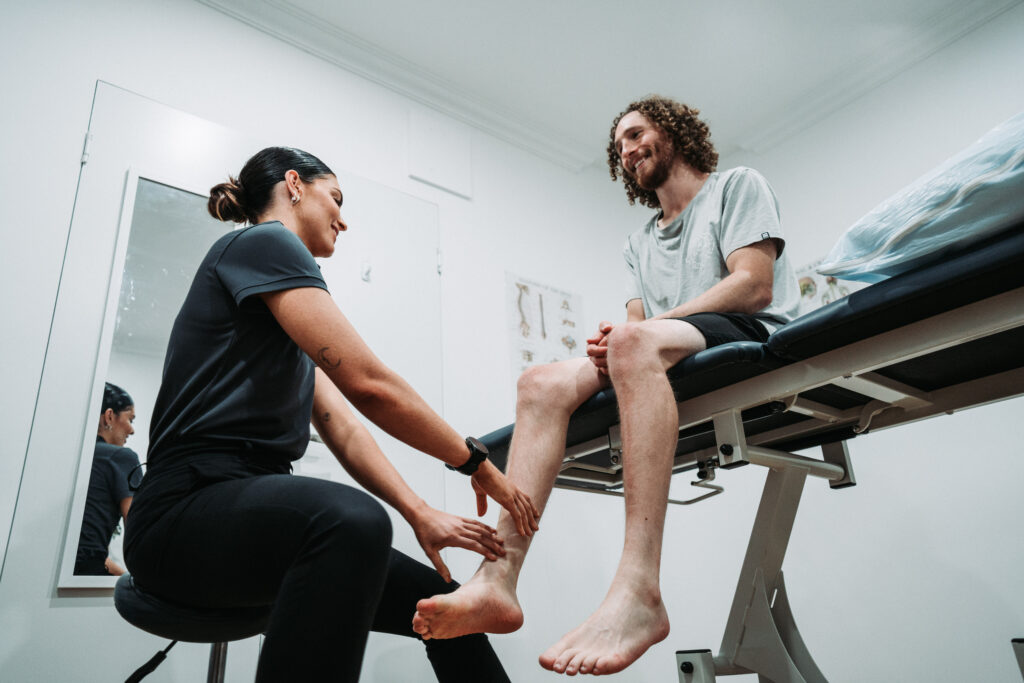
For most injuries affecting upper and lower extremities, we assess side-to-side differences in key muscle groups:
- Quadriceps (knee extensors)
- Hamstrings
- Calf muscles (plantar flexors)
- Gluteal muscles (hip abductors, hip flexors)
- Shoulder rotators and shoulder abductors (for upper limb injuries)
We generally aim for >90% limb symmetry before full return to sport for many lower-limb injuries, though the exact threshold is tailored to individual circumstances and sport demands.
Isometric Strength Testing
Isometric testing isolates targeted muscles under controlled conditions:
- The therapist positions your limb at a fixed joint angle (e.g., 60° knee flexion for quadriceps)
- You build up to a maximum push or pull against an immovable resistance for 3–5 seconds
- Measurements are taken with digital devices rather than just the examiner’s resistance or “feel”
This approach allows us to assess peak force output and, where relevant, rate of force development—how quickly you can generate force, which is critical for activities requiring explosive strength like jumping or changing direction.
Functional Capacity Assessment
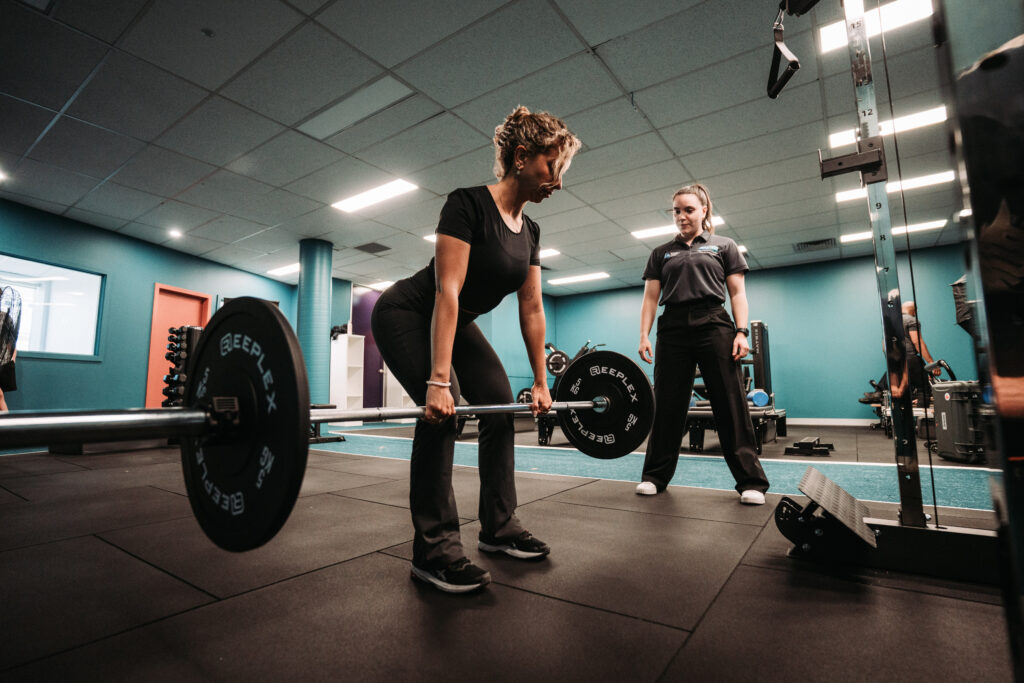
We evaluate how strength translates into real-world movement through tests such as:
- Single-leg squat depth and control
- Step-downs from various heights
- Hop testing (single-leg, triple hop, crossover hop)
- Sit-to-stand test
- Loaded carries
The focus is on quality of movement, control, and endurance—not only peak force. Poor squat quality, for instance, predicts 2.5-fold higher ACL reinjury odds according to research.
Load Tolerance Review
We discuss your recent training and daily activities:
- Running volume and intensity
- Gym sets and weights
- Work hours and physical demands
- Any symptoms during or after activity
This information helps us match testing results to planned progressions—such as increasing running distance, adding plyometrics, or transitioning into Clinical Pilates for continued strengthening.
Objective Measurement with Activforce Dynamometry
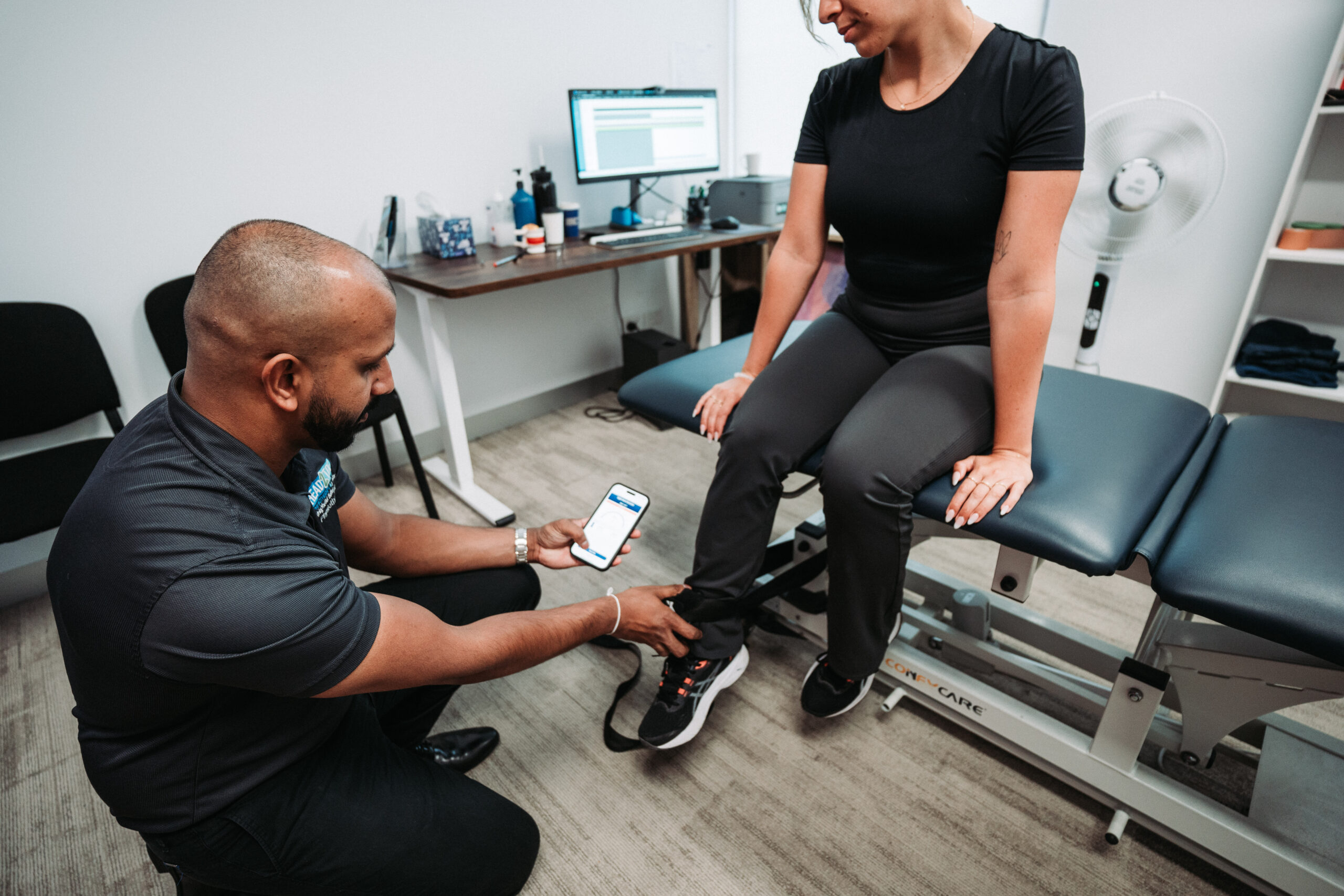
At Head2Toe, we use Activforce handheld dynamometry to move beyond subjective manual muscle testing. This tool represents a game changer in how we track rehabilitation progress.
What Is Activforce?
Activforce is a compact digital device held between the therapist and patient that measures how hard you can push or pull. It provides real-time force readings in kilograms or newtons displayed on a screen or synced to an app.
Unlike traditional muscle strength grading using the Medical Research Council (MRC) 0–5 scale—where grades depend on the examiner’s resistance and subjective judgement—Activforce provides precise measurement with ±1% accuracy.
Advantages Over Traditional Testing
| Traditional Manual Testing | Activforce Dynamometry |
|---|---|
| Grades 0–5 (subjective) | Force in kg or N (objective) |
| 15–20% variability between testers | ±1% accuracy |
| Difficult to detect small changes | Detects asymmetries as small as 5% |
| Limited tracking over time | Serialized data logs and charts |
This more precise measurement capability makes Activforce ideal for rehabilitation, where we need to track subtle improvements and detect deficits that might otherwise go unnoticed.
Clinical Examples
ACL Reconstruction Follow-Up A netball player 4 months post-ACL reconstruction needs knee extensors strength compared bilaterally. Using Activforce, we measure 245N on the surgical side versus 280N on the uninjured side—an 87% limb symmetry index. This tells us she needs continued quadriceps focus before return-to-sport clearance.
Achilles Tendinopathy Reassessment A runner with Achilles tendinopathy wants to reintroduce plyometric training. We measure calf strength (plantar flexors) and find 92% symmetry with good force tolerance—indicating readiness for progressive hopping drills.
Patient Benefits
Seeing objective progress is motivating. Patients tell us things like “my quad strength improved from 18 kg to 28 kg since last month”—concrete evidence that their work is paying off.
This data also helps justify clinical decisions:
- Delaying return to competition when strength hasn’t recovered sufficiently
- Safely increasing training load when numbers support progression
- Identifying which muscles need more attention
The approach requires specialized equipment, but the payoff in accuracy and patient engagement is substantial. Devices like Activforce, most commonly dynamometers in clinical settings, provide the objectivity that hand grip dynamometry brought to upper limb assessment—now extended across all major muscle groups including elbow flexors, elbow extensors, wrist extensors, finger flexors, and lower extremities.
From Pain Relief to Long-Term Capacity
True recovery means restoring strength, control, and resilience—not just eliminating pain. This is the strengths perspective we bring to rehabilitation at Head2Toe: building your capacity to handle life’s demands with a margin of safety.
Strength assessment supports long-term outcomes by ensuring:
- Rehabilitation doesn’t stop prematurely once pain settles
- Progression into higher-level training (Clinical Pilates, strength and conditioning, return-to-running programs) is guided by data
- The likelihood of recurring injuries and flare-ups months later is reduced
Practical Scenarios
Office Worker with Chronic Neck Pain A patient with persistent neck and shoulder tension completes initial treatment focused on symptom relief. Over 8–12 weeks, we use periodic strength assessments to guide progression from pain management into postural and scapular strengthening. Testing shoulder abductors and upper back muscles ensures she can maintain the gains and handle sustained desk work without recurrence.
Postpartum Return to Exercise A new mother wants to return to running and gym classes after pregnancy. Periodic strength assessments help us safely progress core and pelvic floor loading, ensuring she reaches full range of capacity before high-impact activity. This approach supports her well being and long-term engagement with exercise.
Head2Toe’s Philosophy
Our approach—“get better, stay better, live better”—is supported by objective testing, structured programs, and regular re-evaluation rather than one-off treatments. We believe in helping clients discover their full potential through measurable progress, not vague reassurances.
This philosophy extends beyond sport. Whether your focus is career success through physical health, positive relationships supported by an active life, or simply the ability to achieve goals without pain holding you back, strength assessment provides the foundation.