



Training for a marathon or chasing a new personal best, only to be sidelined by injury, can be frustrating, and common. You’re not alone.
A recent study found about 4 in 10 runners sustain a running-related musculoskeletal injury1. Many of these develop gradually through overuse, from a mismatch between training load and the tissue’s capacity to handle it2. They may reduce enjoyment of running and, in some cases, lead to a temporary or permanent stop to training3.
The 5 common running injuries are:
- Patellofemoral pain syndrome (also runner’s knee): 16.7%
- Medial tibial stress syndrome (also shin splints): 9.1%
- Plantar fasciitis: 7.9%
- Iliotibial band syndrome: 7.9%
- Achilles tendinopathy: 6.6%
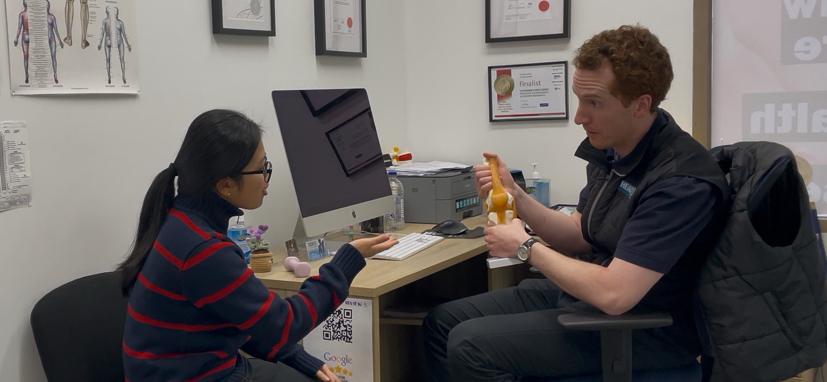
At Head2Toe Physiotherapy & Podiatry (Brunswick, Moonee Ponds & Kew), our sports physiotherapists are skilled in diagnosing, treating and managing these conditions, creating an individualised plan to get you back into running safely.
This article explains the 5 common running injuries, how to recognise them and how sports physiotherapy can help keep your training on track.
The 5 common running injuries
1. Patellofemoral pain syndrome: 16.7%
The causes are said to be multifactorial, and contributing factors may occur at different areas of the lower limb, including proximal factors (hip or thigh muscle weakness), local factors (structure or movement of the kneecap), and foot mechanics (such as increased pronation). Together, these factors may alter how load is distributed through the patellofemoral joint during running4.
Common symptoms5
- General knee pain around or behind the patella
- Pain when loading a bent knee (running, climbing, stairs, squatting)
- Sometimes crepitus/grinding when bending the knee, swelling
When should you seek further assessment?
Significant or sudden swelling, true locking, repeated giving way, or inability to bear weight following an injury may suggest intra-articular pathology (meniscal tear, patellar instability).
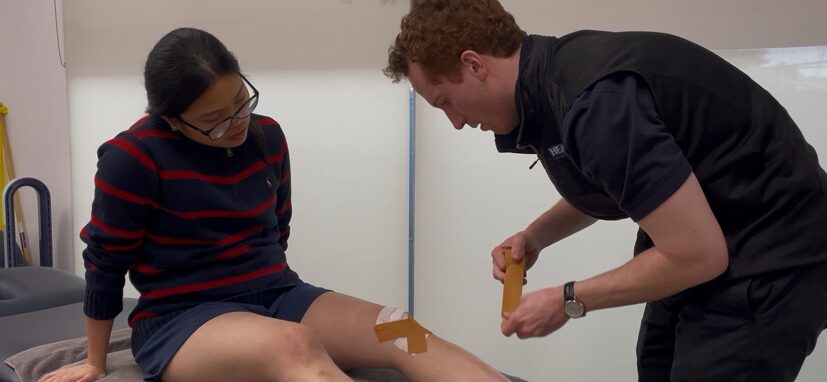
2. Medial tibial stress syndrome (also shin splints): 9.1%
The exact mechanism behind MTSS isn’t fully understood. Current evidence points to two contributing processes: repetitive bending of the tibia beyond its capacity to adapt, causing a bone stress reaction, and/or repeated pulling from the calf muscles on the bone’s surface6,7. A meta-analysis of runners found risk factors include prior MTSS history, less training experience, increased BMI and pronated foot posture8.
- Ache along the inner side of the shin, often affecting both legs, tender to touch ≥ 5 cm
- Pain that typically starts at the onset of activity and eases with rest
- In some cases, pain decreases as the session warms up, only to return later during activity
- Often linked to a recent, rapid increase in training load with limited recovery
(In more advanced or persistent cases, pain can also be present at rest.)
When should you seek further assessment?
If you experience constant pain during exercise that stops you from continuing, focal tenderness < 5 cm at the inner shin, or pain triggered by single-leg hopping, as these may suggest a tibial stress fracture rather than MTSS8.
3. Plantar fasciitis: 7.9%
The plantar fascia is a band of tissue that runs along the bottom of the foot, from the heel to the toes. It supports the foot’s arch and helps absorb shock during walking and running. Overuse can irritate and gradually damage this tissue, leading to plantar fasciitis. Risk factors include increased body mass index and body mass9,10, limited ankle dorsiflexion related to calf tightness, and prolonged weight-bearing10, alongside flat or high-arched feet.
Common symptoms10
- Sharp, localised pain at the inner side of the heel
- Most noticeable with the first few steps after rest or inactivity
- Pain that may ease with activity but return or worsen with prolonged standing or activity
- Tightness in the calf muscles and Achilles tendon
When should you seek further assessment?
Inability to bear weight, or sharp, focal pain directly on the heel bone rather than the arch, can point to a calcaneal stress fracture rather than plantar fasciitis11. Our sports podiatrists also assess and manage foot and ankle conditions like this, including orthotic prescription where appropriate.
4. Iliotibial band syndrome: 7.9%
The iliotibial band is a long, dense band of tissue that runs along the outer thigh, from the hip to just below the outer knee. During activities involving repeated knee bending, such as running, it can compress a sensitive layer of tissue beneath it against the outer part of the femur, causing pain, this is now understood to be a compression-related issue rather than pure friction, as previously thought12. It’s often linked to weakness in the hip abductor muscles, which affects how the knee tracks during movement13.
Common symptoms14
- Burning or sharp pain on the outer side of the knee, often at ~20–30° of knee bend
- Pain occurs after a period of running and worsens with continued activity
- Sometimes accompanied by a snapping or clicking sensation at the outer knee
When should you seek further assessment?
ITBS carries a low risk of serious pathology, but seek assessment if you notice swelling, locking, or your knee giving way, as these may indicate a different knee condition, such as a meniscal tear.
5. Achilles tendinopathy: 6.6%
This section covers midportion Achilles tendinopathy, where pain is felt a little above the heel — the more common presentation in runners. Pain located right at the tendon’s attachment to the heel bone may indicate a different type of tendon problem requiring a different approach.
Achilles tendinopathy develops from repeated overloading of the tendon beyond its capacity to adapt. A systematic review identified risk factors including a prior history of lower limb tendinopathy or fracture, reduced calf muscle strength, and greater lateral foot roll-over during running15.
Common symptoms16
- Pain localised to the Achilles tendon, usually a few cm above the heel
- Morning stiffness that eases with movement
- Pain that increases with activity such as running or jumping, and may ease with warm-up before returning afterward
- Tenderness or thickening of the tendon on palpation
When should you seek further assessment?
If you hear a sudden “pop” or are unable to push off or point your foot downward, this can indicate an Achilles tear or rupture and an urgent referral is needed.
Where sports physiotherapy fits in
Across all five conditions, individualised load management and exercise therapy , targeting the specific strength or loading deficits identified for each injury, has the strongest evidence base and forms the foundation of treatment. Manual therapy, taping, orthotics and other techniques such as dry needling are used as adjuncts, providing short-term symptom relief or facilitating a patient’s ability to engage in loading, rather than serving as stand-alone treatments.
| Injury | Management |
|---|---|
| Patellofemoral pain syndrome | Combined programmes, such as pairing exercise with orthoses, taping, or manual therapy, outperform exercise alone for short-term pain relief17,18. Isolated joint mobilisations and passive treatments like ultrasound aren’t supported by current evidence, which is why an individualised exercise programme remains the priority over passive treatment alone. |
| Medial tibial stress syndrome | Removing the aggravating load comes first, since continuing to train through symptoms delays healing regardless of what else is added19. Neuromuscular training (plyometric and body weight exercises) and gait retraining (step width, foot strike pattern, and joint alignment) are then factored in to address the underlying mechanics and reduce recurrence. |
| Plantar fasciitis | Stretching and manual therapy are both graded as effective in current guidelines, so they’re best used together rather than replacing each other10. Taping and orthoses can add relief in the short term, and night splints may help patients whose pain is worse first thing in the morning. |
| Iliotibial band syndrome | Most cases resolve within six weeks of progressive stretching and hip abductor strengthening alone14. Adjuncts such as taping or shockwave therapy are generally reserved for cases that don’t respond to exercise, rather than being used in isolation. |
| Achilles tendinopathy | Eccentric/heavy slow resistance loading exercise is the clear first-line treatment, with the load progressing according to the individual’s pain tolerance16. Stretching is added where ankle flexibility is limited, and passive treatments like manual therapy or shockwave therapy can support the loading programme. |
FAQs
What helps relieve pain quickly?
Relative rest, avoiding aggravating activities, and simple measures like ice can help ease pain during a flare-up, but they don’t address the underlying issue. Prolonged rest can leave the tissue deconditioned for return to running, while doing too much too soon can risk aggravating it further, so the right balance matters. Long-term resolution comes from a structured rehabilitation program that gradually restores the tissue’s capacity to handle load.
Do I need imaging to know what’s wrong?
Clinical guidelines support diagnosing these conditions through patient history and physical examination alone, without routine imaging5,10,14,16,17. Imaging is generally reserved for more severe or unclear presentations, for example, ruling out a stress fracture in suspected MTSS, a bone spur in plantar fasciitis, or a tear or rupture in Achilles tendinopathy. If your symptoms aren’t improving as expected, imaging may help confirm the diagnosis or guide treatment.
How long does recovery take?
Recovery time depends on the tissue involved and injury severity, therefore there’s no single timeline. Bone-stress conditions like MTSS often improve within 4–6 weeks with careful load management. Tendon-related conditions such as Achilles tendinopathy typically take longer (often ≥ 3 months), reflecting how tendons heal and adapt. In all cases, recovery relies on a structured, progressive return to loading rather than complete rest.
Can I still run / how will this affect my training?
For most running injuries, patellofemoral pain, plantar fasciitis, ITBS, and Achilles tendinopathy, you won’t need to stop running entirely; treatment usually means adjusting distance, intensity, or frequency while your body adapts with rehab. Shin splints (medial tibial stress syndrome) are the exception: because bone stress is involved, a short period of more complete rest is typically needed before a gradual return-to-run program begins. In both cases, a physiotherapist can map this against your specific goals.
Do I need a referral to see a physio?
No referral is needed as physiotherapists are primary contact practitioners, so you can book directly. If you have a GP referral, or you’re accessing care through Medicare, DVA, TAC, or WorkCover, you’re still welcome to book directly with us, see our Prices & Funding page for details. If you’re unsure what applies to you, our reception team can help clarify before your appointment.
When to see a physiotherapist
If you recognise your symptoms in one of the conditions above, or something feels off that doesn’t quite fit what’s described here, it’s worth getting assessed rather than guessing. Injury can be frustrating, especially when you’re working toward a goal like a marathon or a new personal best, but the sooner it’s addressed, the sooner you can get back to training with confidence, in the long run.
At Head2Toe Physiotherapy & Podiatry (Brunswick, Moonee Ponds & Kew), our experienced physiotherapists and podiatrists are here to help. Book online, or contact us on 03 9326 0168 or info@head2toe.com.au to book an assessment or ask a question.
References
- Kakouris N, Yener N, Fong DTP. A systematic review of running-related musculoskeletal injuries in runners. J Sport Health Sci. 2021;10(5):513-522. https://doi.org/10.1016/j.jshs.2021.04.001
- Bertelsen ML, Hulme A, Petersen J, Brund RK, Sørensen H, Finch CF, et al. A framework for the etiology of running-related injuries. Scand J Med Sci Sports. 2017;27(11):1170-1180. https://doi.org/10.1111/sms.12883
- van der Worp MP, ten Haaf DSM, van Cingel R, de Wijer A, Nijhuis-van der Sanden MWG, Staal JB. Injuries in runners; a systematic review on risk factors and sex differences. PLoS One. 2015;10(2):e0114937. https://doi.org/10.1371/journal.pone.0114937
- Powers CM, Witvrouw E, Davis IS, Crossley KM. Evidence-based framework for a pathomechanical model of patellofemoral pain: 2017 patellofemoral pain consensus statement from the 4th International Patellofemoral Pain Research Retreat, Manchester, UK: part 3. Br J Sports Med. 2017;51(24):1713-1723. https://doi.org/10.1136/bjsports-2017-098717
- Crossley KM, Stefanik JJ, Selfe J, Collins NJ, Davis IS, Powers CM, et al. 2016 patellofemoral pain consensus statement from the 4th International Patellofemoral Pain Research Retreat, Manchester: part 1: terminology, definitions, clinical examination, natural history, patellofemoral osteoarthritis and patient-reported outcome measures. Br J Sports Med. 2016;50(14):839-843. https://doi.org/10.1136/bjsports-2016-096384
- Saad MA, Jamal JM, Aldhafiri AT, Alkandari SA. Medial tibial stress syndrome: a scoping review of epidemiology, biomechanics, and risk factors. Cureus. 2025;17(3):e81463. https://doi.org/10.7759/cureus.81463
- Fallon K. Shin pain in athletes. Aust J Gen Pract. 2023;52(11):767-770. https://doi.org/10.31128/AJGP-03-23-6767
- Hamstra-Wright KL, Huxel Bliven KC, Bay C. Risk factors for medial tibial stress syndrome in physically active individuals such as runners and military personnel: a systematic review and meta-analysis. Br J Sports Med. 2015;49(6):362-369. https://doi.org/10.1136/bjsports-2014-093462
- Hamstra-Wright KL, Huxel Bliven KC, Bay RC, Aydemir B. Risk factors for plantar fasciitis in physically active individuals: a systematic review and meta-analysis. Sports Health. 2021;13(3):296-303. https://doi.org/10.1177/1941738120970976
- Koc TA Jr, Bise CG, Neville C, Carreira D, Martin RL, McDonough CM. Heel pain–plantar fasciitis: revision 2023: clinical practice guidelines linked to the International Classification of Functioning, Disability and Health from the Academy of Orthopaedic Physical Therapy and American Academy of Sports Physical Therapy of the American Physical Therapy Association. J Orthop Sports Phys Ther. 2023;53(12):CPG1-CPG39. https://doi.org/10.2519/jospt.2023.0303
- Rio E, Mayes S, Cook J. Heel pain: a practical approach. Aust Fam Physician. 2015;44(3):96-101. Available from: https://www.racgp.org.au/afp/2015/march/heel-pain-a-practical-approach
- Fairclough J, Hayashi K, Toumi H, Lyons K, Bydder G, Phillips N, et al. The functional anatomy of the iliotibial band during flexion and extension of the knee: implications for understanding iliotibial band syndrome. J Anat. 2006;208(3):309-316. https://doi.org/10.1111/j.1469-7580.2006.00531.x
- Foch E, Brindle RA, Pohl MB. Lower extremity kinematics during running and hip abductor strength in iliotibial band syndrome: a systematic review and meta-analysis. Gait Posture. 2023;101:73-81. https://doi.org/10.1016/j.gaitpost.2023.02.001
- Bonoan M, Morales M, Liu XW, Oyeniran O, Zheng K, Palatulan E. Iliotibial band syndrome current evidence. Curr Phys Med Rehabil Rep. 2024;12(2):193-199. https://doi.org/10.1007/s40141-024-00442-w
- van der Vlist AC, Breda SJ, Oei EHG, Verhaar JAN, de Vos RJ. Clinical risk factors for Achilles tendinopathy: a systematic review. Br J Sports Med. 2019;53(21):1352-1361. https://doi.org/10.1136/bjsports-2018-099991
- Chimenti RL, Neville C, Houck J, Cuddeford T, Carreira D, Martin RL. Achilles pain, stiffness, and muscle power deficits: midportion Achilles tendinopathy revision – 2024. J Orthop Sports Phys Ther. 2024;54(12):CPG1-CPG32. https://doi.org/10.2519/jospt.2024.0302
- van der Heijden RA, Lankhorst NE, van Linschoten R, Bierma-Zeinstra SMA, van Middelkoop M. Exercise for treating patellofemoral pain syndrome. Cochrane Database Syst Rev. 2015;(1):CD010387. https://doi.org/10.1002/14651858.CD010387.pub2
- Collins NJ, Barton CJ, van Middelkoop M, Callaghan MJ, Rathleff MS, Vicenzino BT, et al. 2018 consensus statement on exercise therapy and physical interventions (orthoses, taping and manual therapy) to treat patellofemoral pain: recommendations from the 5th International Patellofemoral Pain Research Retreat, Gold Coast, Australia, 2017. Br J Sports Med. 2018;52(18):1170-1178. https://doi.org/10.1136/bjsports-2018-099397
- Kuwabara A, Dyrek P, Miller Olson E, Kraus E. Evidence-based management of medial tibial stress syndrome in runners. Curr Phys Med Rehabil Rep. 2021;9(4):177-185. https://doi.org/10.1007/s40141-021-00326-3
Authored by Joanne Lee
Swinburne Physiotherapy Student at Head2toe & Future Physiotherapist








 42 Pascoe Vale Road, Moonee Ponds 3039