Oct. 20, 26
SIJ Pain or Lower Back Pain? How a Physio Assesses the Difference
Buttock or lower back pain can come from the SIJ, the spine or the hip. Here is how our physios tell them apart, and what treatment involves.
Learn More








The McKenzie Method (also known as Mechanical Diagnosis and Therapy — MDT) is a globally recognised assessment and treatment system for spinal, joint, and muscular pain.
Unlike traditional approaches that focus on temporary pain relief, the McKenzie system helps identify the mechanical cause of pain and teaches you the exact movements and postures that relieve it.
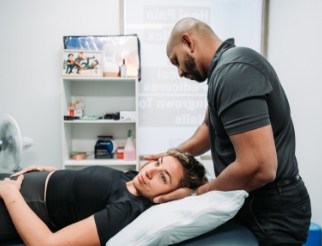
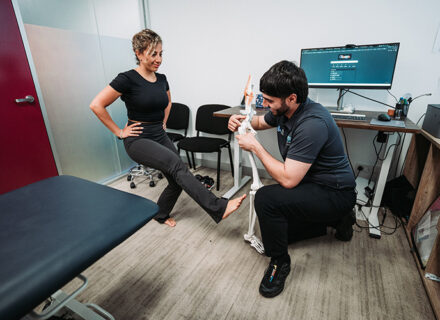
At Head2Toe, our physiotherapists use McKenzie principles to help patients manage back, neck, and limb pain through a combination of assessment, movement correction, and self-management strategies.

You may benefit from the McKenzie approach if you experience:
Many types of spinal and joint pain are mechanical, meaning they stem from how we move, sit, or load our bodies throughout the day.
Prolonged sitting, slouching, or repetitive lifting can stress discs, joints, and soft tissues — creating pain, tightness, and stiffness.
The McKenzie Method identifies your directional preference (the movement or posture that eases your pain) and uses it to guide treatment and prevent flare-ups.

McKenzie-trained physiotherapists with postgraduate expertise in spinal and musculoskeletal care

Focus on patient independence — learn how to relieve pain on your own

Integration of McKenzie with hands-on therapy, dry needling, and exercise rehabilitation when needed

Evidence-based care for acute, subacute, and chronic pain

Convenient Brunswick and Moonee Ponds clinics with private treatment rooms and exercise spaces

Your McKenzie-trained physiotherapist will:
The goal is not just to get you out of pain — but to make you confident in self-managing your condition for the long term.

In your first appointment, your physiotherapist will:
Follow-up appointments will monitor your response, progress your exercises, and ensure that your improvements are lasting.
The McKenzie approach is suitable for:

The McKenzie Method (MDT) is one of the most researched approaches in musculoskeletal physiotherapy. Key findings from the scientific literature include:
As with any approach, no single method suits every person — which is why our physiotherapists combine McKenzie assessment with hands-on therapy, dry needling and graded exercise when your presentation calls for it.
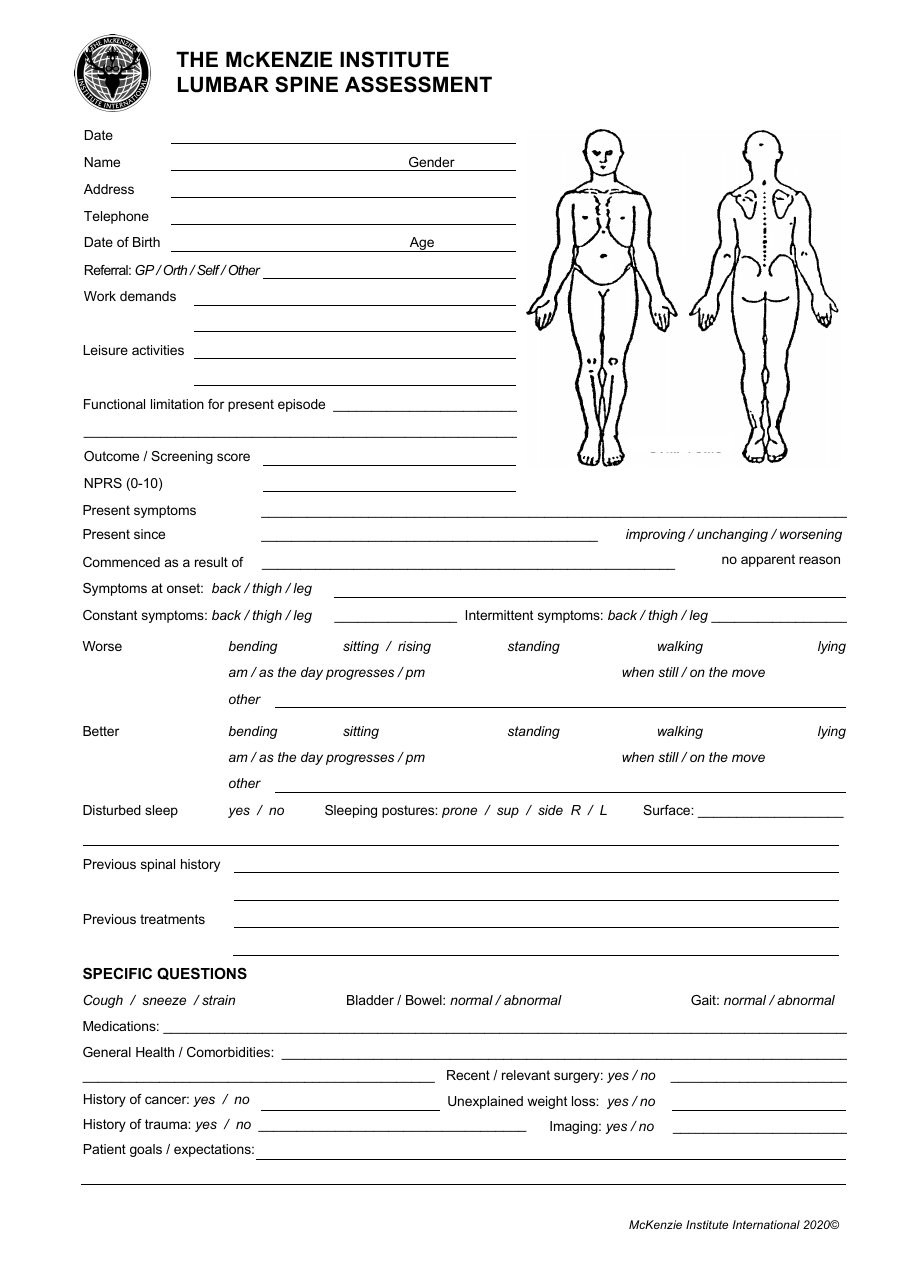
Your first visit follows the standardised McKenzie Institute Lumbar Spine Assessment — the same structured form used by MDT-trained clinicians worldwide (pictured). It records:
Download the McKenzie Lumbar Spine Assessment Form (PDF) to see exactly what your physiotherapist records — so you know what to expect before you arrive. 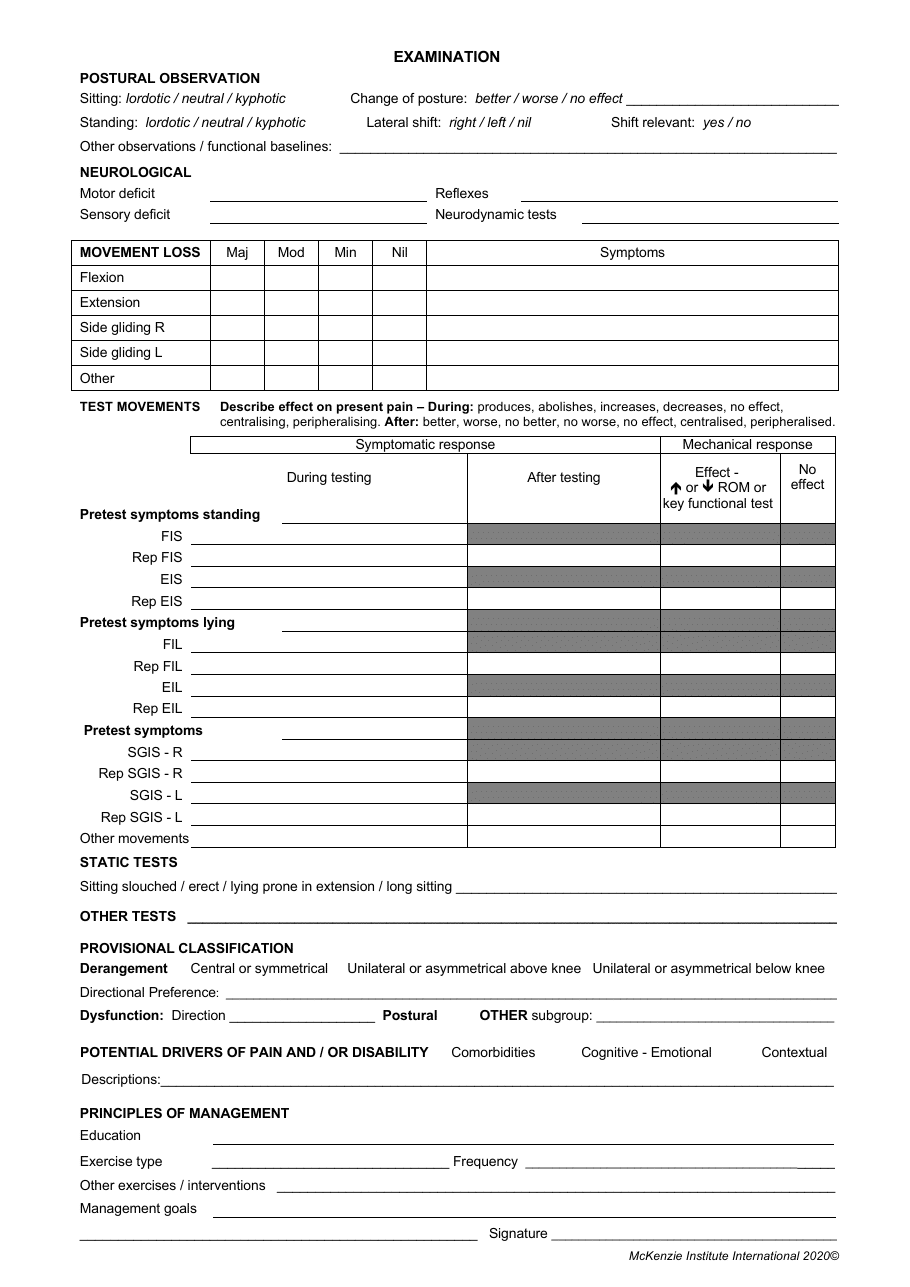
It focuses on finding the cause of your pain and teaching you how to treat it yourself — rather than relying solely on passive treatments.
Yes. It’s highly effective for long-standing neck or back pain that fluctuates or radiates into the limbs.
Many patients notice improvement within 1–3 sessions once the correct movement direction is identified.
Yes. McKenzie-trained physiotherapists are skilled in assessing and safely guiding movement for disc-related pain.
You’ll be taught how to self-manage pain and maintain spinal health with minimal daily exercises once symptoms resolve.
Buttock or lower back pain can come from the SIJ, the spine or the hip. Here is how our physios tell them apart, and what treatment involves.
Learn More
EPC plans (now called GP Chronic Condition Management Plans) give you up to 5 Medicare-subsidised physio or podiatry sessions each calendar year. Here's how they work at Head2Toe — eligibility, how the calendar-year allocation and carry-over rules work, claiming through Tyro, and answers to the most common questions.
Learn More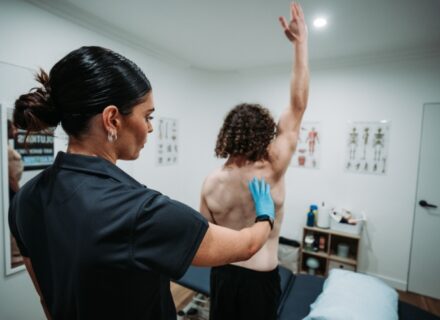
A physio’s guide to frozen shoulder (adhesive capsulitis) – symptoms, causes, the 3 stages, how long it lasts and treatment options.
Learn More
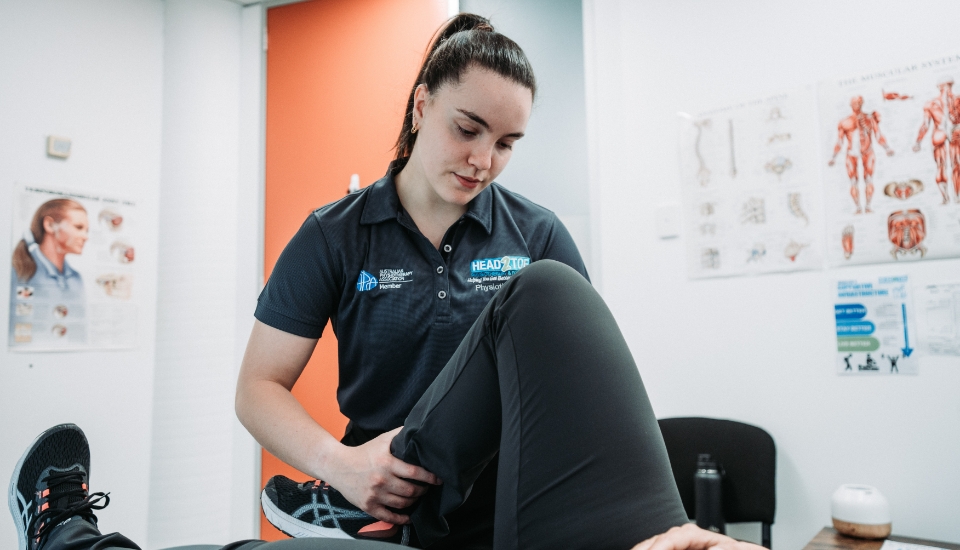
Physiotherapy is the assessment, diagnosis and treatment of musculoskeletal injuries. Some of the conditions we treat in Melbourne include:
Error: No feed with the ID 3 found.
Please go to the Instagram Feed settings page to create a feed.


 42 Pascoe Vale Road, Moonee Ponds 3039
Suite 1, Level 1, 30 Sydney Road Brunswick Victoria 3056 Australia
1407 Burke Road, Kew 3102