




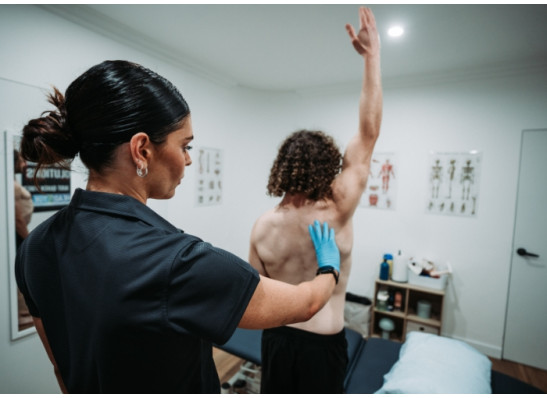
Frozen shoulder, also called adhesive capsulitis, is a condition where the tissues around the shoulder joint become painful, thickened and stiff, restricting how far you can move your arm (1).
It can make everyday movements surprisingly difficult. Reaching into a cupboard, putting on a jacket, washing your hair or getting comfortable in bed can all become harder, and over time it can feel like you are losing more and more movement.
The good news is that frozen shoulder can improve over time, and physiotherapy can help. At Head2Toe Physiotherapy & Podiatry in Brunswick, Moonee Ponds and Kew, treatment is tailored to your symptoms, your stage of frozen shoulder and the activities that matter to you.
Frozen shoulder at a glance: Frozen shoulder causes shoulder pain that comes on gradually, followed by stiffness in several directions. It usually passes through three stages – freezing, frozen and thawing – over a year or more. Many people improve with time, but 40–50% still have some pain or stiffness years later (5). Exercise, hands-on physiotherapy and, for some people, injections arranged through your GP can help.
On this page
- What is frozen shoulder?
- Frozen shoulder symptoms and red flags
- What causes frozen shoulder?
- The 3 stages of frozen shoulder
- How long does frozen shoulder last?
- How is frozen shoulder diagnosed?
- Frozen shoulder treatment
- Frequently asked questions
What is frozen shoulder?
Your shoulder joint is surrounded by a capsule of connective tissue. In frozen shoulder, this capsule becomes inflamed, thickened and tight. This causes pain and gradually limits how far the shoulder can move in several directions (1).
Frozen shoulder is different from most other causes of shoulder pain because the joint itself becomes stiff – even when someone else tries to move your arm for you.
Frozen shoulder symptoms and red flags
Symptoms usually come on gradually. Common signs of frozen shoulder, and red flags that need prompt medical attention, include:
| Common frozen shoulder symptoms | Red flags – seek medical care |
|---|---|
| Pain around the shoulder that comes on gradually and is often worse at night | Sudden, severe shoulder pain after an injury |
| Stiffness that increases over time | Severe or rapidly worsening pain or stiffness |
| Difficulty lifting your arm, reaching overhead, behind your back or out to the side | Unexplained fever, or persistent swelling, redness or warmth |
| Trouble sleeping, especially lying on the painful side | Significant weakness, pins and needles, numbness or tingling in your arm |
| Movement becoming restricted in several directions | Chest pain or shortness of breath |
If you have any red flag symptoms, please seek medical assessment straight away.
What causes frozen shoulder?
1. Sometimes there is no obvious reason
Frozen shoulder can develop without a clear injury or event. This is called primary or idiopathic frozen shoulder (1,2).
2. After an injury, surgery or a period of reduced movement
Frozen shoulder can also develop after a period of reduced shoulder movement, such as following an injury, surgery or another shoulder problem (1,2).
3. Alongside other health conditions
Frozen shoulder is more common in people with diabetes, some thyroid conditions, Dupuytren’s disease and other autoimmune disorders (1,2).
The 3 stages of frozen shoulder
Frozen shoulder is traditionally described in three stages. Pain tends to be the main problem early on, while stiffness becomes the bigger issue later (3,4).
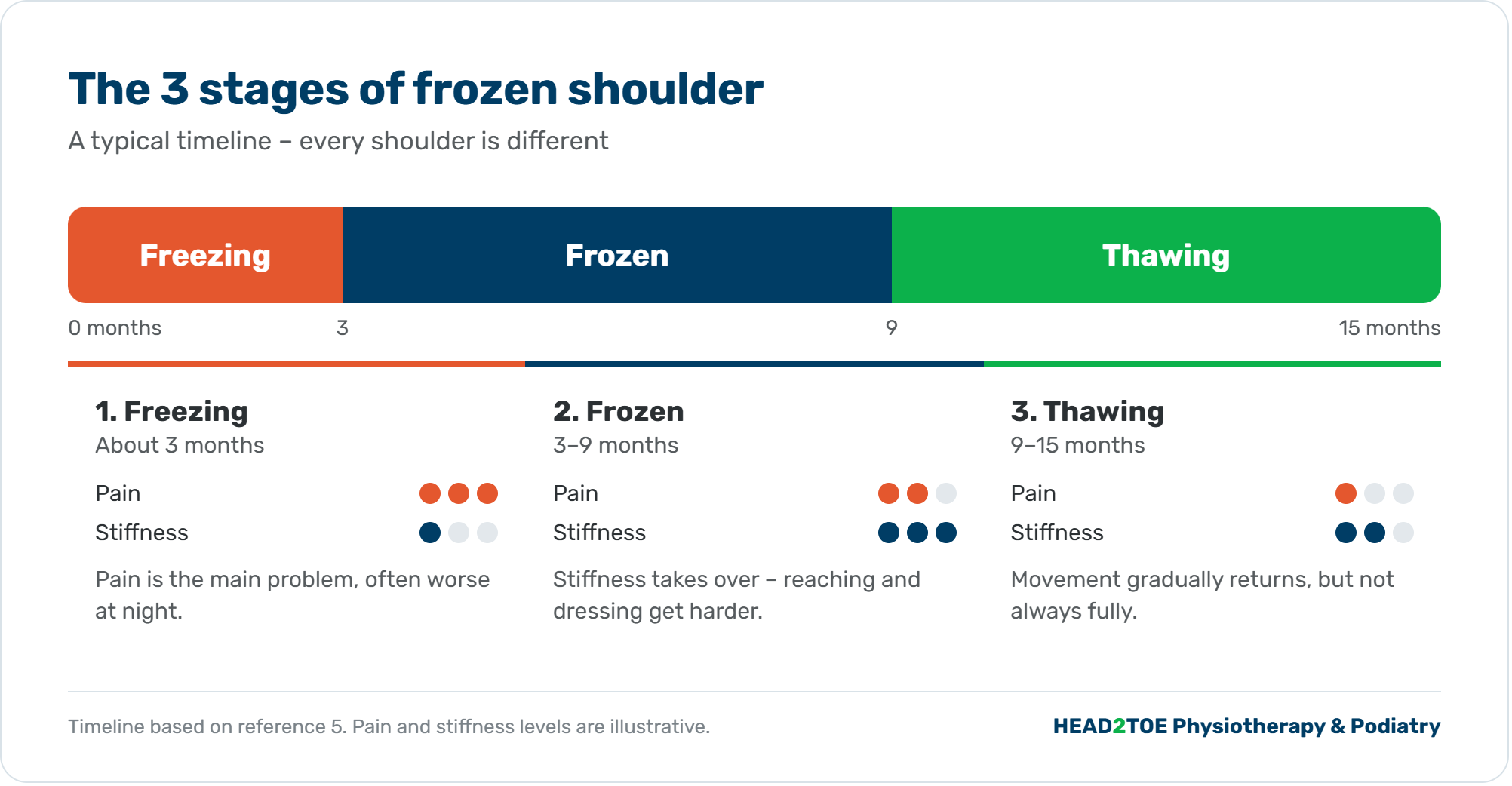
| Stage | What happens | Typical duration (5) |
|---|---|---|
| 1. Freezing | Painful / inflammatory stage | About 3 months |
| 2. Frozen | Stiff stage | 3–9 months |
| 3. Thawing | Recovery stage | 9–15 months |
How long does frozen shoulder last, and will it go away on its own?
For a long time, frozen shoulder was described as a “self-limiting” condition that would fully resolve without treatment. Newer research challenges this view (3,4).
Some people with frozen shoulder do recover to a normal level of function. However, studies show that 40–50% of people still have ongoing pain and stiffness 5–11 years after their symptoms began (5). This suggests that the right management may help prevent lasting problems.
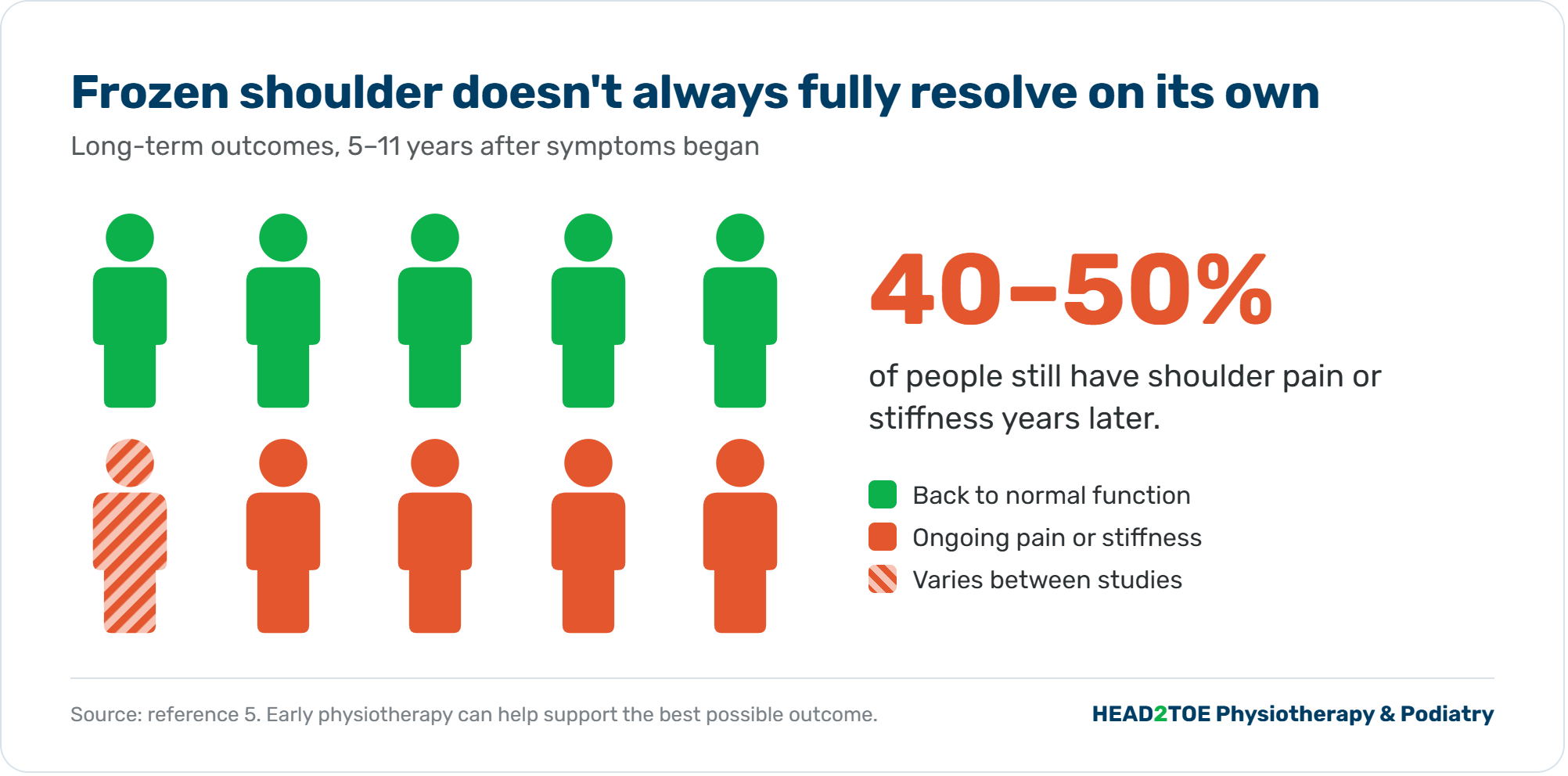
So while frozen shoulder often improves with time, recovery doesn’t always mean a full return to normal. Seeing a physiotherapist early can help you manage your symptoms and support the best possible outcome as your shoulder heals.
How is frozen shoulder diagnosed?
Frozen shoulder is usually diagnosed from your history and a physical examination. Your physiotherapist will check how far your shoulder moves – both on its own and when they move it for you – because frozen shoulder typically restricts both, particularly rotating the arm outwards (1).
They will also look for other possible causes of your symptoms, such as a rotator cuff tear or arthritis, and refer you to your GP or for imaging if needed.
Frozen shoulder treatment
The most useful treatment depends on your symptoms, how irritable your shoulder is and how much movement you currently have. Your physiotherapist will first assess your shoulder and talk with you about what you’re struggling with day to day.
Physiotherapy for frozen shoulder may include education, advice on activity and pain management, gentle exercises to maintain or gradually improve movement, and strengthening as your shoulder becomes less painful. Hands-on treatment and dry needling may also be used. Where appropriate, your physiotherapist can work alongside your GP if a corticosteroid injection or hydrodilatation is being considered.
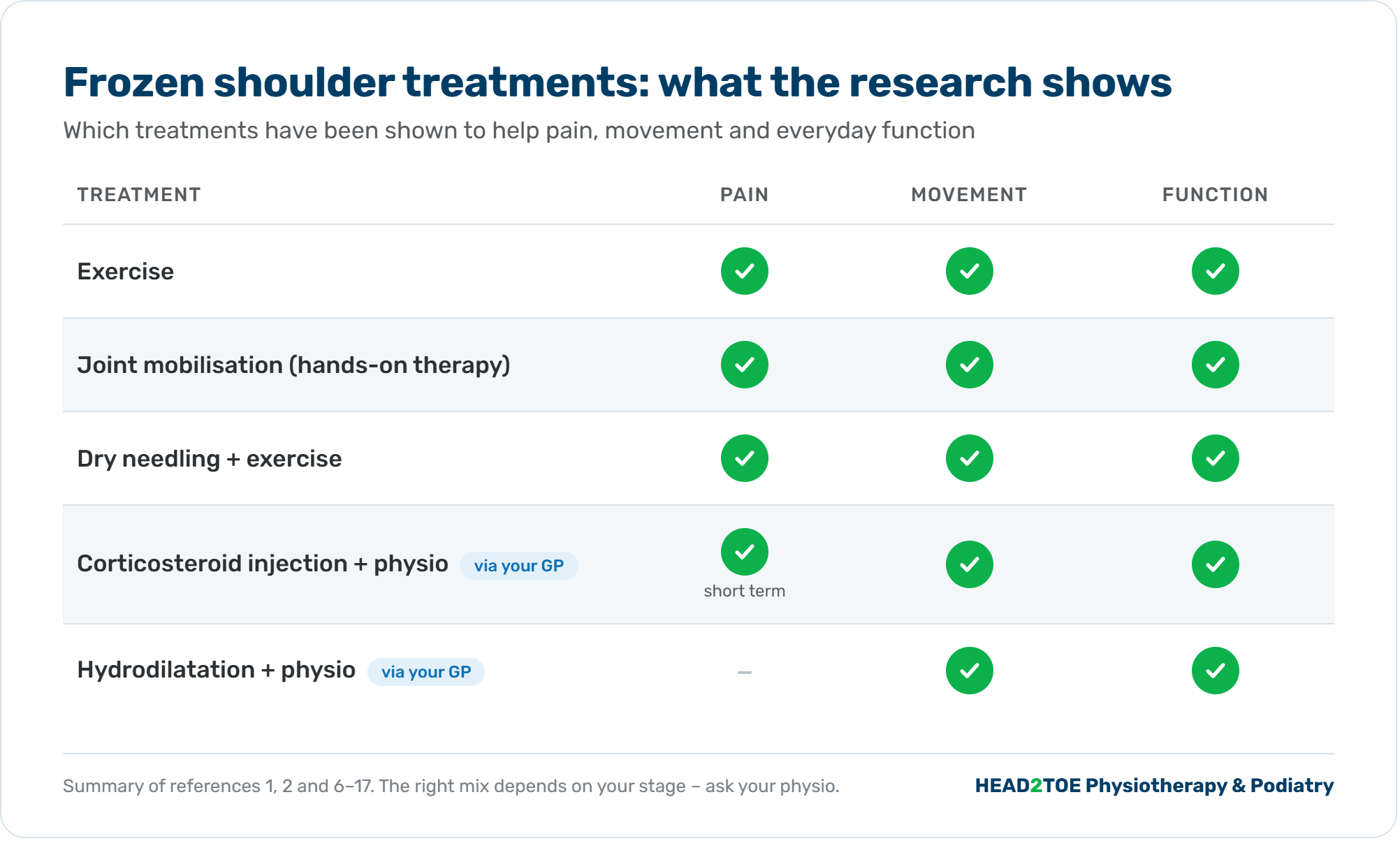
| Treatment | What the evidence shows |
|---|---|
| Exercise | Exercise improves pain, movement and function, and is strongly recommended – especially during the frozen stage (1,9,10). |
| Joint mobilisation (hands-on therapy) | Mobilisation techniques improve pain, movement and function, with consistent benefits across multiple studies when added to standard treatment (11,12,13,14). |
| Dry needling | Dry needling combined with exercise is supported for easing pain and improving movement and function (10,15). |
| Corticosteroid injection + physiotherapy | Injections are effective for short-term pain relief, especially in the early stage. Adding physiotherapy can further improve range of motion and everyday function (2,6,7,8). |
| Hydrodilatation + physiotherapy | Hydrodilatation can improve function and movement – particularly rotating the arm outwards – in both the short and long term. Combined with physiotherapy, it is an effective option for frozen shoulder (16,17). |
Frozen shoulder physio in Brunswick, Moonee Ponds and Kew
If your shoulder is becoming painful or stiff and everyday activities are getting harder, you don’t have to simply put up with it. An early assessment can help you understand what’s happening and what you can safely do to keep your shoulder moving.
At Head2Toe Physiotherapy & Podiatry, our physiotherapists will assess your shoulder, explain your symptoms and build a treatment plan around your goals.
Book an appointment at our Brunswick, Moonee Ponds or Kew clinic. Book online now, call 03 9326 0168 or email info@head2toe.com.au.
Frequently asked questions
Will frozen shoulder go away on its own?
Frozen shoulder often improves with time, but not always completely. Research suggests 40–50% of people still have some pain or stiffness 5–11 years after their symptoms began (5). Seeing a physiotherapist early can help you manage symptoms and support the best possible recovery.
How long does frozen shoulder last?
Frozen shoulder usually improves gradually over months to years rather than overnight. How long it lasts varies between people, and symptoms change through the different stages (3,4). Pain tends to be more noticeable early on, while stiffness often becomes the bigger problem later. Your physiotherapist can help you work out which stage you may be in and what you can work on now.
Who gets frozen shoulder?
Frozen shoulder can develop without a clear cause, or after a period of reduced shoulder movement such as following an injury or surgery. It is more common in people with diabetes, some thyroid conditions, Dupuytren’s disease and other autoimmune disorders (1,2).
What happens if frozen shoulder is left untreated?
Frozen shoulder can improve on its own, but recovery is often slow and some people are left with ongoing stiffness or reduced movement (3,4,5). Leaving it untreated doesn’t necessarily mean your shoulder will be permanently damaged, but pain and stiffness can keep affecting your sleep, work and everyday activities. Physiotherapy can help you manage symptoms, keep moving comfortably and gradually return to the things that matter to you.
Should I keep moving my shoulder if it hurts?
Gentle movement is encouraged, but that doesn’t mean pushing through severe pain (1). The right amount of movement depends on how irritable your shoulder is. Your physiotherapist can show you exercises that suit your current stage and help you balance keeping the shoulder moving with letting irritated tissues settle.
Can I get a corticosteroid injection for frozen shoulder?
A corticosteroid injection may be an option for some people, particularly when pain is making it hard to sleep or move. Injections can help reduce pain and improve movement, especially in the earlier stages of frozen shoulder (2,6,7,8).
Another option is hydrodilatation, where fluid is injected into the shoulder joint to help stretch the tight joint capsule. It may improve shoulder function and movement, and is usually followed by physiotherapy to help maintain the gains (16,17).
These treatments aren’t suitable for everyone and should be discussed with your GP or another qualified healthcare professional first. Physiotherapy can be used alongside them to help you rebuild movement and get back to everyday activities (7).
When should I see a physiotherapist for frozen shoulder?
Consider seeing a physiotherapist if shoulder pain or stiffness is affecting your sleep, work, exercise or daily activities – especially if your movement is gradually getting worse. A physiotherapist can assess whether your symptoms fit frozen shoulder, help rule out other causes and create a treatment plan based on what you need to get back to doing.
References
- Date A, Rahman L. Frozen Shoulder: Overview of Clinical Presentation and Review of the Current Evidence Base for Management Strategies. Future Science OA. 2020;6(10):FSO647. doi:10.2144/fsoa-2020-0145
- Nakandala P, Nanayakkara I, Wadugodapitiya S, Gawarammana I. The efficacy of physiotherapy interventions in the treatment of adhesive capsulitis: A systematic review. J Back Musculoskelet Rehabil. 2021;34(2):195–205. doi:10.3233/BMR-200186
- Wong CK, Levine WN, Deo K, Kesting RS, Mercer EA, Schram GA, et al. Natural history of frozen shoulder: fact or fiction? A systematic review. Physiotherapy. 2017;103(1):40–7. doi:10.1016/j.physio.2016.05.009
- Konarski W, Poboży T, Hordowicz M, Poboży K, Domańska J. Current concepts of natural course and in management of frozen shoulder: A clinical overview. Orthop Rev (Pavia). 2021;12(4):8832. doi:10.4081/or.2020.8832
- Amako M, Hamada J, Karasuno H, Sahara R, Yamaguchi M, Yano Y, et al. Evaluation of glenohumeral adduction restriction in frozen shoulder as a predictor of intra-articular lesion severity: a comparison study of the freezing and frozen phases. JSES Int. 2025;9(5):1546–54. doi:10.1016/j.jseint.2025.04.041
- Wang W, Shi M, Zhou C, et al. Effectiveness of corticosteroid injections in adhesive capsulitis of shoulder: A meta-analysis. Medicine. 2017;96(28):e7529. doi:10.1097/MD.0000000000007529
- Kraal T, Sierevelt I, van Deurzen D, van den Bekerom MP, Beimers L. Corticosteroid injection alone vs additional physiotherapy treatment in early stage frozen shoulders. World J Orthop. 2018;9(9):165–72. doi:10.5312/wjo.v9.i9.165
- Challoumas D, Biddle M, McLean M, Millar NL. Comparison of Treatments for Frozen Shoulder: A Systematic Review and Meta-analysis. JAMA Netw Open. 2020;3(12):e2029581. doi:10.1001/jamanetworkopen.2020.29581
- Mertens MG, Meert L, Struyf F, Schwank A, Meeus M. Exercise Therapy Is Effective for Improvement in Range of Motion, Function, and Pain in Patients With Frozen Shoulder: A Systematic Review and Meta-analysis. Arch Phys Med Rehabil. 2022;103(5):998–1012.e14. doi:10.1016/j.apmr.2021.07.806
- Jain TK, Sharma NK. The effectiveness of physiotherapeutic interventions in treatment of frozen shoulder/adhesive capsulitis: a systematic review. J Back Musculoskelet Rehabil. 2014;27(3):247–73. doi:10.3233/BMR-130443
- Yao J, Liu C, Pang T, Li J, Lei S, Zhang J, et al. Joint mobilization for frozen shoulder. Medicine (Baltimore). 2022;101(14):e29123. doi:10.1097/MD.0000000000029123
- Yang JL, Chang CW, Chen SY, Wang SF, Lin JJ. Mobilization techniques in subjects with frozen shoulder syndrome: randomized multiple-treatment trial. Phys Ther. 2007;87(10):1307–15. doi:10.2522/ptj.20060295
- Duzgun I, Turgut E, Eraslan L, Elbasan B, Oskay D, Atay OA. Which method for frozen shoulder mobilization: manual posterior capsule stretching or scapular mobilization? J Musculoskelet Neuronal Interact. 2019;19(3):311–6.
- Gupta M, Vats M, Ramprabhu K. Effectiveness of Muscle Energy and Joint Mobilisation Techniques on Range of Motion, Pain and Functional Ability in Adults With Frozen Shoulder: A Systematic Review. Musculoskeletal Care. 2024;22(4):e70000. doi:10.1002/msc.70000
- Clewley D, Flynn TW, Koppenhaver S. Trigger point dry needling as an adjunct treatment for a patient with adhesive capsulitis of the shoulder. J Orthop Sports Phys Ther. 2014;44(2):92–101. doi:10.2519/jospt.2014.4915
- Poku D, Hassan R, Migliorini F, Maffulli N. Efficacy of hydrodilatation in frozen shoulder: a systematic review and meta-analysis. Br Med Bull. 2023;147(1):121–47. doi:10.1093/bmb/ldad018
- Sinha R, Patel P, Rose N, Tuckett J, Banerjee AN, Williams J, et al. Analysis of hydrodilatation as part of a combined service for stiff shoulder. Shoulder & Elbow. 2017;9(3):169–77. doi:10.1177/1758573216687273







 42 Pascoe Vale Road, Moonee Ponds 3039