




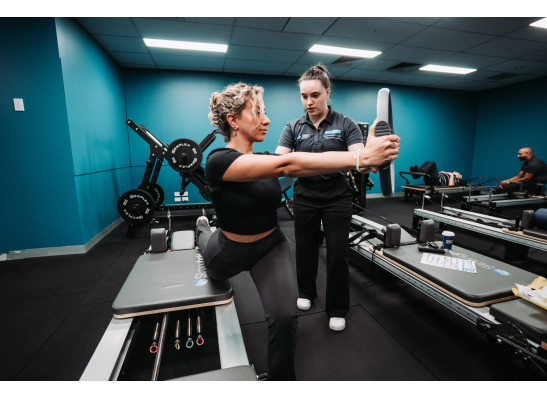
If you’ve ever started a physiotherapy program feeling optimistic, only to find your enthusiasm fading a few weeks later, you’re not alone. This pattern is so common among individuals undergoing physiotherapy that experienced clinicians plan for it.
In the first week or two of rehabilitation, motivation tends to come naturally. Pain drops, movement improves, and the feedback is immediate. But around week three, something shifts. Progress becomes less obvious, exercises feel routine, and the drive that got you started begins to waver.
At Head2Toe Physiotherapy & Podiatry, we see motivation as a clinical tool—just as essential as manual therapy or exercise prescription. When patient motivation is nurtured throughout the rehab process, outcomes improve. When it’s left to chance, patients often drop off precisely when they need to push through.
Your mindset, your expectations, and your consistent attendance directly influence everything from pain reduction and strength gains to your risk of re-injury six months down the track. This article explains why motivation dips happen, how to recognise the warning signs, and what practical strategies you can use this week to stay on track.
How Motivation Shapes Physiotherapy Outcomes
In a rehabilitation context, motivation is the drive to show up, complete your exercises, and keep progressing even when improvements feel slow. It’s the factor that separates patients who achieve lasting results from those who feel better temporarily, only to find themselves back at square one months later.
Evidence consistently shows that highly motivated patients attend more sessions, complete home programs more consistently, and achieve better long-term outcomes. They experience fewer flare-ups at the six to twelve month mark. They return to the activities that matter to them—running along the Merri Creek Trail, playing weekend netball, lifting kids without back pain, or commuting comfortably from Brunswick to the CBD.
What makes this even more interesting is that motivation influences not just how you feel, but how you function. A positive mindset about recovery changes what you’re willing to attempt. Confidence in your ability to handle load affects how quickly you progress. Belief that you’ll get better shapes whether you actually do.
Both internal factors and external factors contribute to rehab motivation. Internal factors include your beliefs, your goals, your fear of pain, and your past experiences with injury. External factors include the clinic environment, the guidance you receive from physiotherapists, the support of family and friends, and how well your treatment plan fits into your daily life. Understanding both sides helps you take control of the parts you can influence.
The Rehab Journey: Why Motivation Often Drops Around Week 3
Picture this: you’ve just started physiotherapy for lumbar spine pain or a mild ankle sprain. In week one, you leave your first session with a clear explanation of what’s happening and a simple home program. By day three, you’re already noticing changes—less morning stiffness, easier walking, better sleep. By the end of week two, you’re sleeping through the night and moving with noticeably less discomfort.
This is the relief phase, and it’s naturally motivating. Quick feedback keeps you consistent. You can feel the improvement, so doing the exercises makes sense.
Then week three arrives.
The dramatic pain reduction slows down. You’re still better than when you started, but the daily improvements have become weekly improvements. Your exercises feel repetitive. You start to wonder if you really need to keep doing them.
This is not a plateau. It’s a transition—from pain relief to rebuilding strength, capacity, and load tolerance. Your knee might feel fine walking around the house, but it’s not yet ready to tolerate 5 km runs. Your back might be comfortable at your desk, but it hasn’t developed the resilience to handle a long flight or a weekend of gardening.
The problem is that many people stop attending physio when they “feel 70% better.” This leads to incomplete tissue adaptation and a higher risk of recurrence within three to six months. The original issue remains vulnerable because the hard work of capacity building was never completed.
At Head2Toe, our clinicians routinely warn patients about this week-three dip and proactively plan for it in the treatment roadmap. Awareness alone can make the difference between dropping out and pushing through.

Relief Versus Discipline: The Two Phases of Motivation
The early phase of rehab runs on relief-driven motivation. You’re responding to fast pain reduction, and that response keeps you engaged. Every session delivers visible benefits. Every home exercise feels like it’s doing something.
The later phase runs on discipline-driven motivation. Pain is already improved, but you’re not yet strong enough to return to full function. You’re no longer chasing pain relief—you’re building strength, capacity, and resilience. The gains are slower. The feedback is less immediate.
Consider a post-shoulder surgery patient. In weeks one and two, they’re doing passive movements and basic activation. Progress is obvious. But by weeks three to six, they’ve moved on to strength work with therabands. The exercises are harder. The improvements are less dramatic. Yet this is precisely the phase where lasting recovery is built.
The discipline phase is where “stay better” is created—tendon strength, movement control, and confidence in the injured area. Skip this phase, and you may feel fine for a few months, only to find the same problem returning when you increase your activity.
Understanding this shift helps you maintain a positive mindset when the work feels harder. It’s not that your treatment plan has stopped working. It’s that you’ve moved into the phase where the real gains are made.
Understanding What Motivates You: Goals, Values and Daily Life
Motivation is highly personal. Some people are driven by sport performance—getting back to social tennis or completing a half marathon. Others are driven by independence: carrying groceries up stairs in Moonee Ponds, lifting a toddler after a C-section, or walking pain-free during a 2026 Europe trip.
The key is identifying what matters to you, not just in abstract terms, but in concrete daily activities. Physiotherapists at Head2Toe work with patients to convert vague aims like “get rid of pain” into specific, meaningful, time-framed functional goals.
For example, instead of “I want my knee to feel better,” a meaningful goal might be: “I want to walk 5,000 steps daily without pain by week four” or “I want to return to social tennis in Kew by week ten.”
Take a moment to reflect on what you want to be doing in three, six, and twelve months—not just how you want to feel next week. Do you want to run a park run? Play with your kids without wincing? Sit through a full workday without reaching for painkillers?
These goals need to be realistic, based on clinical assessment and tissue healing timelines. A plantar fasciitis patient has different recovery expectations than someone rehabbing an ACL reconstruction or working through postpartum pelvic floor recovery. Your physiotherapist’s expertise helps ensure your targets are achievable, not discouraging.
When goals are aligned with your daily routines—commuting, caregiving, weekend sport—adherence to exercises becomes far easier. You’re no longer doing exercises because someone told you to. You’re doing them because they connect directly to what you care about.
Setting Meaningful, Measurable Rehab Goals with Your Physiotherapist
An initial consultation at Head2Toe typically includes discussion of both immediate goals and longer-term capacity goals. Immediate goals might include sitting at a desk for 45 minutes without back pain within two weeks, or walking around the block without ankle discomfort. Longer-term goals might be deadlifting 60% bodyweight by three months or running 10 km by week twelve.
To track progress objectively, physiotherapists use specific measures: range-of-motion goniometer readings, single-leg heel raises, sit-to-stand tests, and pain scales. These are recorded at baseline and re-tested every two to four weeks.
Consider a patient who came in with chronic hip pain. At their initial assessment, they could manage only four single-leg bridges before fatigue set in. By week four, they were up to twelve. By week eight, they were performing single-leg Romanian deadlifts with load. Each re-test showed progress—even when the patient felt stuck.
This is why measurable goals matter. During the week-three to week-five window, patients often say “nothing is changing.” But when you show them their range of motion has increased by 15 degrees or their strength test has improved by 40%, the numbers tell a different story. Objective tracking keeps you engaged when subjective feelings might otherwise convince you to quit.
Common Barriers to Motivation in Physiotherapy
Loss of motivation is normal. It’s not a personal failure, and it doesn’t mean you lack discipline. It often reflects predictable challenges that almost every patient faces at some point.
At Head2Toe, physios routinely screen for motivational barriers alongside physical assessments—especially for long-standing issues like chronic low back pain or tendon problems lasting more than three months.
Physical barriers include flare-ups, fatigue, and pain spikes after increasing activity. When you try to do more and your body responds with discomfort, it’s natural to feel discouraged. Fear and avoidance can creep in.
Practical barriers include time pressure for busy professionals, childcare commitments, and commuting between suburbs like Pascoe Vale and the city. Financial constraints and scheduling difficulties affect how consistently you can attend sessions.
Psychological barriers include fear of pain, previous negative rehab experiences, low confidence, and frustration when progress isn’t linear. Mental health plays a significant role here—stress, anxiety, and low mood all influence how motivated you feel.
Different life stages bring different typical barriers. Older adults trying to maintain independence face different challenges than postpartum women rebuilding core strength after pregnancy. A weekend warrior recovering from a knee injury has different concerns than an office worker managing chronic neck pain.
Recognising your specific barriers is the first step to addressing them.
How Your Physiotherapist Can Help You Navigate These Barriers
Education is one of the most powerful tools for enhancing motivation. When you understand pain science and healing timelines, fear and catastrophising decrease. Knowing that a flare-up doesn’t mean damage, that tissue adaptation takes time, and that setbacks are expected—this knowledge changes how you respond to challenges.
Programs can be scaled to fit real life. Head2Toe physios design home routines of 10–15 minutes for office workers, home-based exercises for carers who can’t get out easily, and simple band and bodyweight sessions for those without gym access. The goal is adherence, not perfection.
Appointment frequency can be adjusted based on your needs. Weekly sessions for the first month might transition to fortnightly as you progress. Integration with podiatry or Clinical Pilates can assist when additional support would help.
Small setbacks are expected in rehabilitation. The key is having a plan to respond rather than a reason to quit. Your physiotherapist’s job is to help you develop that plan and adjust it as needed.
Practical Strategies to Boost Your Motivation During Physiotherapy
This section provides concrete, easy-to-apply tactics you can use this week—especially if you’re around week three or four of your program and feeling your motivation slip.
The most effective approach combines behavioural strategies like scheduling and reminders, emotional support through check-ins and encouragement, and program design elements like progressions and variety. At Head2Toe, physios intentionally build these strategies into rehab plans from the start.
1. Break Rehab into Short, Realistic Milestones
Big goals like “return to 10 km running by August 2026” are important for direction, but they’re too far away to motivate you daily. Breaking them into fortnightly milestones creates frequent wins.
A 12-week knee rehab plan, for example, might be divided into three-week blocks:
| Weeks | Focus | Target |
|---|---|---|
| 1–3 | Pain reduction and basic activation | Single-leg balance for 30 seconds |
| 4–6 | Strength building | Step-down exercises with control |
| 7–9 | Power and endurance | Hopping drills, jogging intervals |
| 10–12 | Return to activity | Continuous running, sport-specific drills |
Each milestone gives you something to aim for and celebrate. Ticking off these targets provides the sense of achievement that keeps you engaged during the slower mid-phase of rehabilitation.
At Head2Toe, physios review these milestones in-session and modify based on your response. If you’re progressing faster, targets advance. If you need more time, the plan adjusts.
2. Track Your Progress Objectively
Simple tracking tools make invisible progress visible. Use phone notes, a printed exercise log, or an app to record sets, reps, and pain levels after each session.
Specific metrics you might track include:
- Steps per day (using your phone’s health app)
- Pain rating on waking (0–10 scale)
- Number of reformer springs used in Clinical Pilates
- Squat depth achieved
- Number of heel raises before fatigue
Head2Toe clinicians regularly re-test key measures every two to four weeks and can show you graphs or comparisons. Seeing that your single-leg squat depth has improved by 5 cm or your pain score has dropped from 6 to 3 maintains engagement when you might otherwise think “nothing is changing.”
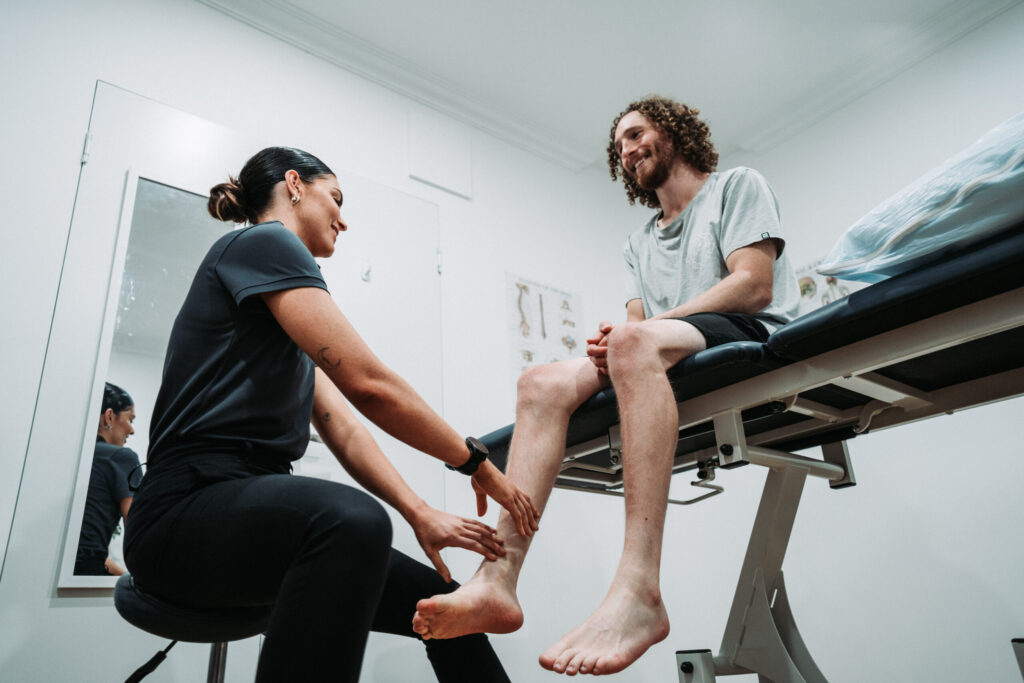
3. Make Rehab Fit Your Routine, Not the Other Way Around
The most successful rehab programs are ones that integrate into your existing life. Ankle exercises while working from home in Brunswick. Glute work during Netflix in the evening. Spinal mobility drills between Zoom calls.
Physios can design “micro-sessions” of five to ten minutes that scatter throughout your day rather than requiring one long block of time that never quite happens.
Head2Toe offers flexible appointment options—early morning or after-work sessions—to help busy professionals stay consistent. When scheduling feels realistic rather than aspirational, long-term adherence improves dramatically.
Overly ambitious plans quickly get abandoned. Realistic scheduling reduces guilt and builds the habit of consistency that ultimately determines your outcomes.
4. Use Accountability and Support
Regular check-ins with the same physiotherapist create built-in accountability. You’re not doing this alone—you’re in a partnership. Knowing someone will ask about your progress at your next session is often the nudge needed to complete your exercises.
Some patients benefit from telling a partner or friend about their rehab goals. Scheduling shared activity—like walking together along local paths three times per week—adds social support to physical practice.
Small-group, physio-led Clinical Pilates sessions at Head2Toe provide both supervision and peer support. Participants often find that seeing others working toward their own goals normalises the journey and boosts morale.
A practical tip: book your next two to three appointments in advance. Protecting rehab time in a busy calendar makes it harder to let sessions slip.
5. Celebrate Small Wins and Reframe Setbacks
Small wins deserve recognition. Being able to sit through a full meeting without neck pain. Climbing stairs with less knee discomfort. Performing a new exercise variation you couldn’t manage two weeks ago. These moments signal real progress.
Physios should actively point out these changes in session, because patients often overlook them. Write down your achievements in your phone—a short list you can look back on during discouraging weeks.
When flare-ups happen (and they will), reframe them: not as failure, but as feedback. A flare-up tells you that load or technique needs adjusting—something you and your physiotherapist can correct together. This perspective shift is vital for maintaining a positive mindset through the inevitable bumps in recovery.
How Clinical Pilates Can Reignite Motivation in the Mid to Late Rehab Phase
Physiotherapist-led Clinical Pilates differs from generic gym classes in several important ways. It begins with individual assessment, delivers tailored programs, operates in small groups of five or fewer, and provides close supervision by qualified therapists.
Clinical Pilates is particularly powerful from about week three onwards—exactly when basic rehab can start to feel repetitive and motivation often dips.
Moving into Pilates allows progression from simple activation exercises to more complex, full-body strength and control work using reformers and other equipment. You’re no longer just maintaining—you’re advancing.
At Head2Toe, many patients transition from one-on-one rehab into one or two Clinical Pilates sessions per week. This serves as a bridge from “feeling better” to “being stronger than before injury.”
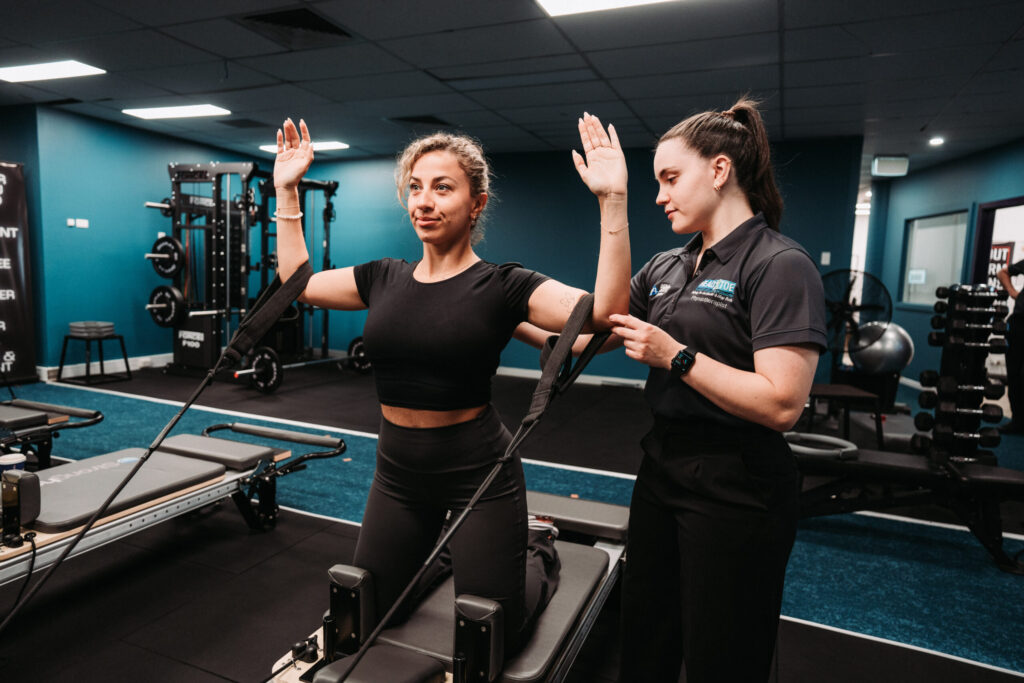
Why Clinical Pilates Works So Well for Motivation
Novelty and variety engage your brain differently. New exercises, adjustable spring tensions, and different body positions feel more interesting than repeating the same three home exercises indefinitely.
Structured progression provides a clear sense of achievement. Moving from beginner to more advanced movements—like progressing from basic footwork to single-leg pressing—shows you’re developing new skills and capacity.
Accountability comes built-in. Pre-booked small-group sessions in Moonee Ponds, Brunswick, Kew, or Pascoe Vale clinics encourage regular attendance. You’re less likely to skip when you’ve committed to a specific time.
The group environment normalises the rehab journey. Seeing others working toward their own goals—some further along, some just starting—reminds you that progress takes time and effort. This social element can be highly motivating while still keeping the focus on your individually tailored program.
From Recovery to Resilience: Using Pilates to “Stay Better”
True success isn’t being pain-free for a week. It’s building resilience so everyday loads—stairs, childcare, sport—feel easier long term. This is the difference between getting better and staying better.
Consider a runner who initially came in with Achilles pain. After completing their initial rehabilitation, they continued Clinical Pilates once a week to maintain calf strength and pelvic control during their 2025 and 2026 running seasons. The result? No recurrence, improved performance, and the confidence to sign up for longer events.
Physios at Head2Toe design Pilates programs to target previous weak points—glutes, core, foot stability—to reduce risk of re-injury. This is where hard work in the discipline phase pays off for months and years to come.
If you feel stuck or bored with your current exercises, especially around week three to five, speak with your physiotherapist about whether Clinical Pilates is an appropriate next step for you.
Our Approach at Head2Toe: Keeping You Motivated from First Session to Full Recovery
Our philosophy is straightforward: help patients get better, stay better, and live better. Motivation isn’t an afterthought—it’s part of the treatment plan from day one.
The typical Head2Toe process includes a thorough initial assessment, clear explanation of findings, collaborative goal setting, a staged rehab plan covering acute, subacute, and chronic phases, and regular re-evaluation every two to four weeks. This structure creates a team approach where you’re an informed and active participant in your recovery.
When foot and ankle mechanics affect motivation—like pain that makes walking programs uncomfortable—integration with podiatry can assist. Custom orthotics or gait adjustments can make standing and walking more comfortable, which supports adherence to walking goals.
For women’s health and pregnancy or postpartum care, we understand that motivation can be particularly affected by fatigue, life changes, and time pressure. Programs are designed with these realities in mind.
Each consultation happens one-on-one in a private room. This creates space for honest conversation about fears, setbacks, and motivational challenges—things that are harder to discuss in an open gym-floor environment.
When to Ask for Help with Motivation—and What to Do Next
Certain signs suggest you need motivational support: skipping exercises for a week, rescheduling sessions repeatedly, or feeling anxious about moving more. If you find yourself making excuses or dreading your next appointment, that’s valuable feedback.
Encourage yourself to bring this up directly with your physiotherapist rather than waiting. This is a normal, expected part of rehab planning—not a confession of failure. Therapists are aware that motivation fluctuates, and they have strategies to help.
Practical next steps might include revisiting your goals to make sure they still feel meaningful, adjusting the program to better fit your current life demands, or adding Clinical Pilates or podiatry input if appropriate. Sometimes a simple change—like different exercises or a new environment—is all it takes to reignite momentum.
Here’s what matters most: dips in motivation around week three are common and manageable. They often signal that you’re ready to progress, not that you should stop. The discipline phase is where long-term results are created, and it’s worth pushing through.
If you’re in Melbourne’s inner-north or inner-east and feel your rehabilitation motivation slipping, contact Head2Toe Physiotherapy & Podiatry. Our clinics in Moonee Ponds, Brunswick, Kew, and Pascoe Vale are ready to help you determine where you are in your rehab journey—and how to regain the momentum that leads to lasting recovery.
Your responsibility is to show up. Ours is to make that effort count.







 42 Pascoe Vale Road, Moonee Ponds 3039